
Modern facilities are under pressure to improve efficiency while minimizing operational costs and environmental impact. The integration of IoT technologies has turned data analysis and automation into powerful facility management tools. As such, building management system software is vital to operational excellence.
Today’s facility managers are discontent with maintenance and monitoring systems that are manual and reactive. Strategies like “set and forget” are now obsolete. Today’s facility managers need real-time visibility, prediction, and automation in response to building performance optimized systems. Cutting-edge BMS platforms are now at the center of facility optimization strategies for building performance.
The transformation from traditional building controls to advanced management platforms is both digital and conceptual regarding how we design and operate modern facilities. Organizations that adopt this dual evolution unlock previously untapped operational cost savings, increased occupant comfort, and metrics of improved sustainability.
Understanding the Core Components of Modern Building Management Systems
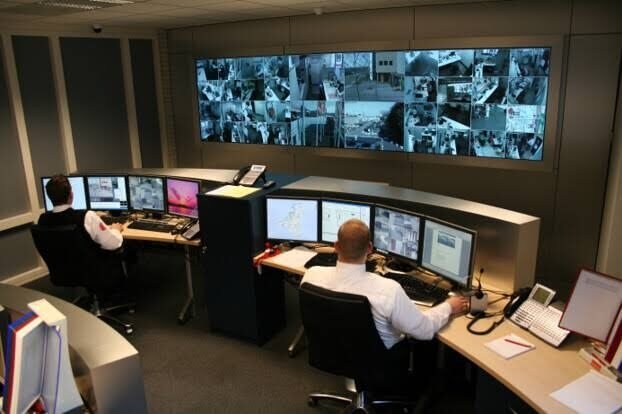
Today’s building management system software features sophisticated HVAC automation and intelligent systems that interface and integrate with automation capabilities. These building management systems now incorporate different building subsystems into a single control system for centralized monitoring, optimization, and intelligent automation of facility operations.
An organization’s operations and systems can be viewed as a hierarchy of collaborative segments, with each serving as a managerial and operational layer. Each built-in framework will have a data validation mechanism called the Data Acquisition (DAC) framework. This layer validates data directly with field devices like sensors and controllers within the organization. This layer enables the operation of communication protocols and network infrastructure that allows data sharing and integration of systems, components, and devices of different complexity and nature.
The Collection System (CS) lies over the DAC layer. This works as the data aggregation framework that works with data collection, evaluation, and refinement. This layer will carry out the basic functions for data collection and initial retrieval. It can be said that the functions of monitoring and data processing fully refers to the modern systems for monitoring and data processing.
Intelligent BMS systems enable management and staff to be geographically distributed by granting mobile, tablet, and PC access to the system, thus opening the possibility of remote management and operation of the system. Availability of restricted functions and operations enables multiple users to work in the system concurrently based on the preset access rights. This layer enables design of charts, graphs, and data retrieval that can be presented as diagrams and custom report formats.
Additional data centers and satellite offices will now be possible to be connected to the system. This enables the communication with the external infrastructure such as the enterprise resource planning, energy management systems, or some external software. This allows the governing and managing of the systems, and devices on a higher level given that global systematic governing will be possible.
Strategic Advantages of Integrated Building Management System Software
Implementing an integrated building management system has measurable benefits on multiple organizational operational dimensions. Improved energy management is often the most immediate and quantifiable advantage, as 30% reductions in energy consumption are achieved through optimized systems driven by advanced scheduling, demand response, and equipment optimization routines.
Predictive and condition-based maintenance provides compelling benefits as well. The integrated systems monitor equipment performance in real-time, allowing them to identify failures proactively, reducing the need for emergency repairs and extending the equipment lifecycle. This 20-25% reduction in maintenance costs while increasing system reliability is achieved through proactive, prescriptive maintenance strategies.
Changes to comfort and productivity, along with other parameters, often add the most long-term value. The correlation between optimal environmental parameters and performance is well-documented, as controlled environments reduce absenteeism while increasing productivity and occupant satisfaction.
Optimization in Space Utilization has recently emerged as an important advantage, especially in the commercial real estate markets where costs associated with space represent a large operational expenditure. Advanced Building Management Systems and their detailed occupancy analytics enable organizations to streamline their real estate portfolio while maintaining service quality.
Streamlined compliance collection processes ensure that organizations stay within the bounds of established regulations while providing accurate data that may be required during audits and certification processes. Streamlined processes also lessen the administrative workload.
Technical Considerations for Building Management System Installation
Successful building management system installation requires careful attention to network architecture, device integration, and scalability considerations. The underlying communication infrastructure must support reliable data transmission between field devices and the central management platform while accommodating future expansion requirements.
Protocol selection significantly impacts system performance and integration capabilities. Modern installations typically support multiple communication protocols simultaneously, enabling integration of legacy systems while accommodating newer devices with advanced capabilities. This flexibility ensures long-term system viability and reduces replacement costs.
Cybersecurity considerations have become paramount in BMS design, requiring robust security measures at multiple system levels. Network segmentation, encryption protocols, and access controls protect against cyber threats while maintaining system functionality. Regular security assessments and updates ensure ongoing protection against evolving threats.
Redundancy and failsafe mechanisms ensure continuous operation even during component failures or network disruptions. Critical systems require backup power supplies, redundant communication paths, and automatic failover capabilities that maintain essential functions during emergencies.
Commissioning and testing protocols validate system performance and ensure proper integration between components. Comprehensive testing should evaluate both individual device functionality and system-wide performance under various operating conditions. This validation process identifies potential issues before full deployment and establishes baseline performance metrics.
Advanced Features of Intelligent Building Management Systems
Intelligent building management system capabilities extend far beyond traditional control functions, incorporating artificial intelligence, machine learning, and advanced analytics to optimize building performance continuously. These systems learn from operational patterns, adapt to changing conditions, and implement optimization strategies that evolve over time.
Predictive analytics leverage historical data and machine learning algorithms to forecast equipment failures, energy demand patterns, and maintenance requirements. This capability enables proactive decision-making that prevents problems before they impact operations while optimizing resource allocation.
Automated demand response capabilities enable buildings to participate in utility demand response programs, reducing energy costs during peak demand periods while supporting grid stability. Advanced systems can automatically adjust loads based on utility signals, weather forecasts, and occupancy patterns.
Advanced scheduling and optimization algorithms consider multiple variables simultaneously when making control decisions. Weather forecasts, occupancy schedules, energy pricing, and equipment performance characteristics all factor into optimized control strategies that balance comfort, efficiency, and cost considerations.
Mobile integration and remote access capabilities enable facility managers to monitor and control building systems from anywhere, facilitating rapid response to issues and enabling more flexible management approaches. Cloud-based platforms provide scalable computing resources and enable advanced analytics capabilities that would be impractical with local hardware.

Implementation Best Practices and ROI Optimization
Maximizing return on investment requires strategic planning that aligns BMS capabilities with specific organizational objectives and operational requirements. The implementation process should begin with comprehensive facility audits that identify optimization opportunities and establish baseline performance metrics.
Phased implementation approaches often provide better results than wholesale system replacements. Starting with critical systems and expanding gradually allows organizations to validate benefits, refine processes, and build internal expertise before committing to comprehensive deployments.
Staff training and change management represent crucial success factors often overlooked in technical planning. Users must understand system capabilities and proper operating procedures to realize intended benefits. Ongoing training programs ensure staff can adapt to system updates and new features.
Performance monitoring and continuous optimization ensure sustained benefits over time. Regular analysis of system data identifies new optimization opportunities and validates that implemented strategies continue delivering expected results. This ongoing attention prevents system drift and maintains peak performance.
Integration with existing business processes ensures that BMS capabilities support broader organizational objectives. The system should complement existing workflows rather than requiring disruptive process changes that reduce user adoption and limit benefits realization.
Future Trends and Technology Evolution
The building management system software landscape continues evolving rapidly, driven by advances in IoT technology, artificial intelligence, and cloud computing platforms. Edge computing capabilities are reducing latency and enabling more sophisticated local processing, while cloud integration provides scalable analytics and remote management capabilities.
Digital twin technology represents an emerging trend that creates virtual models of building systems, enabling advanced simulation and optimization capabilities. These models support predictive maintenance, energy optimization, and space planning decisions by providing detailed insights into system interactions and performance characteristics.
Sustainability reporting and carbon footprint tracking are becoming standard features as organizations face increasing pressure to demonstrate environmental responsibility. Advanced platforms provide detailed emissions tracking, renewable energy integration, and sustainability reporting capabilities that support corporate environmental goals.
Artificial intelligence integration continues expanding, with natural language interfaces, automated optimization, and predictive capabilities becoming increasingly sophisticated. Future systems will require less manual configuration and intervention while providing more accurate predictions and optimization recommendations.
Conclusion
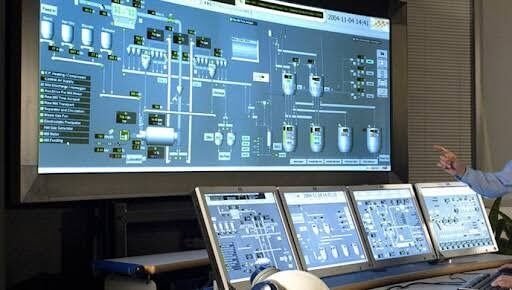
The planned use of building management system software is a critical software investment in streamlining a business’s operational efficiency, occupant satisfaction, and overall business sustainability. Organizations that approach BMS strategically, while focusing on integration, training, and continuous optimization, get unparalleled returns on their spent resources.
Achieving success in investment returns and operational improvement analysis requires changing the approach towards BMS as building only controls and viewing these systems as holistic facility optimization platforms. The most successful system implementations provide adaptability to changing business needs and emerging technologies while seamlessly integrating into existing processes.
Strategic Investments in Advanced building management systems (BMS) is directly tied to the improving focusing management complexity. Organizations that are quick to adopt the Investing in comprehensive BMS capabilities will gain a sustained value to business competitiveness through improved streamlined business operations, reduced business costs, and enhanced experiences for the occupants.
For more than 75 years, IET Africa has been implementing building management systems across East Africa. IET Africa has regional presence, deep industry knowledge, and technical skill in Kenya, Uganda, and Tanzania, allowing us to deliver integrated solutions that optimize and enhance operational reliability for facilities. Our team is experienced in offering comprehensive support throughout a project’s lifecycle, including design, installation, and continuous optimization. We have transformative building management solutions for your facility that enable measurable results. Reach out to IET Africa to find out more.