
Today, the commercial and industrial building landscape has evolved. The sophisticated building management systems now serve as the nerve centers of operational efficiency. The building management systems market stood at USD 41.87 billion in 2025 and is expected to reach USD 116.73 billion by 2030, registering a 22.78% CAGR. This growth in the market reflects the critical concepts of energy management in the installation of building management systems.
To achieve success, the systems must be designed, installed, and operationally commissioned to yield maximum value for the stakeholders. There is a deep and critical understanding of the operational and technical requirements, as well as the framework of set goals. Heating, ventilation, and air conditioning (HVAC) systems integrated at the building level and at the subsector level can be safely, cost-efficiently, and, in ecological terms, economically operated.
Understanding the Foundation: Pre-Installation Assessment
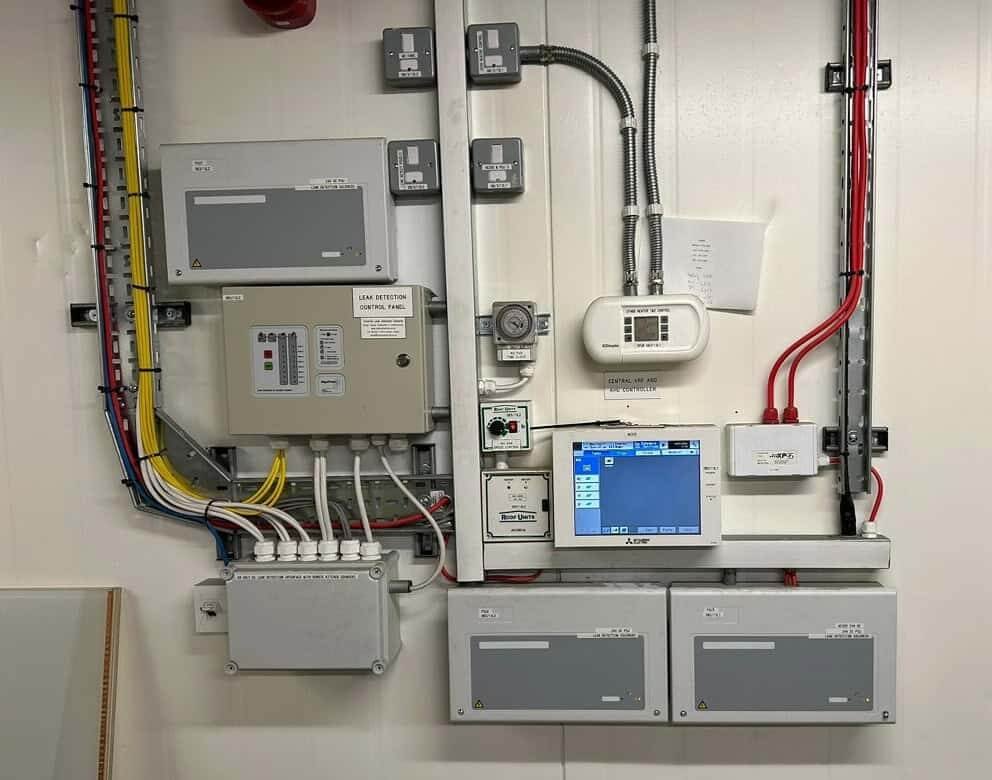
HVAC systems must support the concept of integrated building management. The foundational concepts and frameworks must be adhered to before installation of sophisticated systems begins, which includes site evaluation, modernization and diagnostics of the structure, as well as updating existing systems and registering baseline values.
Assessments must take into account existing electrical equipment, communication networks, as well as the mechanical equipment which forms part of the system. Older structures can be particularly challenging because legacy systems often need to be maintained due to their need for backward compatibility. Additionally, communication protocols that modern building management systems depend on for their proper functioning make network topology planning critical.
Power distribution analysis, along with load calculations, ensures that the new system components can be integrated into the electrical infrastructure without disrupting existing systems. In addition to power, the evaluation also considers data transmission, environmental conditions, and the potential for future system extensions.
System Architecture and Design Considerations
The operational efficiency of a system is often determined during the architectural design phase which can be considered as the pre-implementation stage. In turn, integrated building management systems (IBMS) that are equipped with intelligent systems have a clear need for the optimal positioning of their sensors, controllers, and actuators to guarantee that their coverage is maximized while installation is simplified.
Field-level controllers are usually part of a broader control structure that includes supervisory systems at the enterprise-level, which means that such control structures are typically hierarchical with multiple levels. A distributed approach to control such zones boosts system reliability, and the zonal control granularity is a welcome addition. Central processing units must carefully balance the need to avoid communication delays with the need to be environmentally protected during system operation.
In critical operations, redundancy planning becomes very important. Backup communication paths, spare power supplies, and failover mechanisms help prevent major building operations with the backup systems and spare system components. Designs should consider all possible failure mechanisms and implement protective systems to minimize the risk.
Integration Strategies for Optimal Performance
Achieving optimal integration of building subsystems requires advanced systems engineering. Coordination involving the heating, ventilation, and air conditioning (HVAC) systems is often the most difficult part of the integration because of the tight coupling relation of heating, cooling, ventilation, and indoor air quality systems.
Connecting devices from different manufacturers raises the issue of protocol compatibility. Most systems nowadays are connected through several communication protocols such as BACnet, Modbus, and LonWorks, which makes interface design very challenging. In most cases, gateway devices are used as points of translation from one protocol domain to another.
Integration of various operational systems with the enterprise applications ensures a continuous flow of information as long as the database structure is competent. In addition, capturing and tending historical data, as well as writing complex reports requires the database to maintain high performance even as information increases over time.
Sensor Placement and Calibration
The precision of placement of the sensors affects how accurate and responsive the system is. To guarantee precise measurements, temperature sensors must be positioned away from heat sources, direct sunlight, and air currents.
Humidity sensors must be shielded from condensation while exposed to representative air sample.Occupancy sensors must be set up in locations that will help capture real utilization of space and avoid false positives from equipment working or outside interactions. As for light sensors, they need to consider both natural and artificial light to accurately perform daylight harvesting.
Baseline accuracy is established through the initial calibration procedures for all devices that need to be measured and all sensors that read data. These processes involve adjusting offset values based on set reference instruments. Long-term accuracy and reliability is ensured through regular recalibration schedules.
Communication Networks and Infrastructure
The backbone of any modern building management system lies in its communication infrastructure. Wired networks typically provide the most reliable connectivity, with structured cabling systems supporting both current requirements and future expansion needs.
Fiber optic connections offer superior performance for backbone links between major system components, providing high bandwidth and immunity to electrical interference. Copper-based networks remain suitable for many field device connections, particularly where power-over-Ethernet capabilities simplify installation requirements.
Wireless technologies increasingly supplement wired infrastructure, particularly in retrofit applications where cable installation proves challenging or cost-prohibitive. However, wireless networks require careful radio frequency planning to avoid interference and ensure adequate coverage throughout the facility.
Network security considerations have become paramount as building systems increasingly connect to enterprise networks and cloud-based services. Proper network segmentation, firewall configuration, and access control measures protect against cybersecurity threats while maintaining operational functionality.

Installation Best Practices and Quality Control
Systematic installation procedures ensure consistent results and minimize potential issues during commissioning. Work scheduling must coordinate multiple trades while minimizing disruption to ongoing building operations. Temporary system bypasses often become necessary to maintain critical functions during installation periods.
Quality control checkpoints throughout the installation process verify compliance with design specifications and industry standards. Cable testing validates communication path integrity, while power system verification ensures adequate supply capacity and proper grounding.
Documentation practices during installation create valuable references for future maintenance and troubleshooting activities. As-built drawings, device configuration files, and installation photographs provide essential information for system operators and maintenance personnel.
Commissioning and Testing Procedures
Comprehensive commissioning validates system performance against design specifications and operational requirements. Functional testing verifies that all system components respond correctly to control signals and maintain specified setpoints under various operating conditions.
Sequence of operations testing confirms that complex control algorithms function as intended across different operational scenarios. This testing phase often reveals integration issues that require adjustment of control parameters or communication settings.
Performance verification involves measuring actual energy consumption, indoor environmental conditions, and system response times under normal operating conditions. These measurements establish baseline performance metrics for future comparison and optimization efforts.
Building Management System Maintenance Strategies
Effective building management system maintenance begins immediately following installation completion. Preventive maintenance schedules must balance system reliability requirements with operational budget constraints while ensuring optimal performance throughout the system lifecycle.
Regular software updates maintain security patches and feature enhancements while preserving system stability. Hardware maintenance includes cleaning sensors, checking electrical connections, and replacing components approaching end-of-life conditions.
Predictive maintenance techniques leverage system data to identify potential issues before they result in equipment failures. Trending analysis reveals gradual performance degradation that might otherwise go unnoticed until major problems develop.
Training and Knowledge Transfer
Successful system operation depends heavily on properly trained personnel who understand both system capabilities and operational procedures. Training programs should address different user levels, from basic operators to advanced system administrators.
Hands-on training sessions provide practical experience with system interfaces and common troubleshooting procedures. Documentation packages must include user manuals, maintenance procedures, and emergency response protocols tailored to the specific installation.
Ongoing support relationships with system vendors ensure access to technical expertise and software updates throughout the system lifecycle. Service agreements should clearly define response times, coverage limitations, and upgrade pathways.
Troubleshooting and Performance Optimization
Even well-designed systems occasionally require troubleshooting to address performance issues or component failures. Systematic diagnostic approaches help identify root causes while minimizing system downtime.
Communication problems often manifest as intermittent device failures or erratic system behavior. Network diagnostic tools can identify cable faults, protocol errors, or bandwidth limitations affecting system performance.
Performance optimization involves fine-tuning control parameters to achieve desired operational outcomes while maximizing energy efficiency. This iterative process typically continues for several months following initial commissioning as building usage patterns become established.
Future-Proofing and Expansion Considerations
Designs should also center on installing evolving technologies, as systems will need to be adaptable to future enhancements and expanded functions. New capabilities can be easily integrated with modular architectures, with minimal need for redesigning the entire system.
Capacity planning guarantees sufficient capability for extra devices and a greater volume of data processing in the future. The spare capacity for future growth in the communication infrastructure should not degrade the current performance metrics.
Remote monitoring and advanced analytics features that lower operational costs and enhance system value are made possible through cloud integration. Cloud integration, however, requires strong cybersecurity, dependable cloud infrastructure, and a stable internet connection.

Conclusion
Thorough planning and unwavering operational focus are necessary for the skilled execution of modern building system installations. Balance along with focus on performance objectives in the long run is vital, and the requirements of technical capabilities and practical constraints must be met.
Years of dependable system operation, reduced energy costs, and improved occupant comfort result from reliable building system installation. Installation precision directly correlates with maintenance costs, system reliability, and building performance.
IET has provided sophisticated electrical engineering solutions in Kenya, Uganda, and Tanzania for over 75 years, earning the trust of East Africa. We ensure your building management system installations are done right by combining years of technical expertise with extensive installation experience. Reach out to IET and learn how building automation solutions can enhance your facility’s operational efficiency and sustainability