
The landscape of modern production has fundamentally shifted as automation in the manufacturing industry continues to reshape how facilities operate across East Africa. With the industrial belt of Nairobi and the manufacturing belts of Kampala, companies are enjoying advanced technologies, which have boosted their productivity at a competitive advantage. The knowledge of these systems would be vital to the professionals in the industry aiming at streamlining their operations to attain increasing consumer needs in the market.
The integration of automated manufacturing process technologies has moved from optional upgrades to essential infrastructure that determines market viability. Companies that embrace these advances position themselves at the forefront of industrial evolution, while those hesitant risk falling behind competitors who understand that automation in the manufacturing industry drives sustainable growth.
Understanding Modern Manufacturing Automation
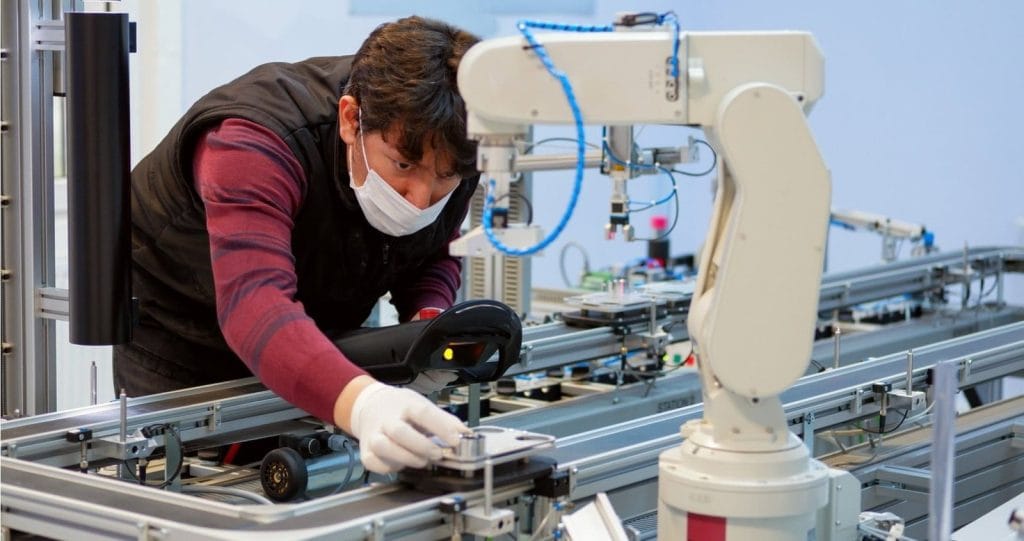
Automation in the manufacturing industry encompasses far more than simple mechanization. The current systems also incorporate the use of programmable logic controllers, human interface and advanced sensors, which are communicated in real-time. These elements combine to form smart production places wherein machines can make their decisions by using the set parameters. In this case, the technology has also developed so much as compared to rudimentary assembly lines and has advanced to sophisticated ecosystems that are self-governing and adaptive. Engineers now design automated production system architectures that predict maintenance needs before failures occur, dramatically reducing costly downtime. Managing production, the managers are able to see a lot further into all the facets of their company, not to mention the quality measures and the use of raw materials. Such an all-encompassing strategy turns around conventional manufacturing and makes it dynamic, responsive, changing in response to the situations in real time.
Core Components of Automated Production Systems
Industrial facilities rely on several interconnected technologies that form the backbone of modern automation in the manufacturing industry. Variable frequency drives can regulate the speed of motors on demand and thereby lower the amount of energy used at the same time prolonging equipment life.
Intelligent motor control centers are able to manage several machineries at a time to coordinate their tasks in the most effective manner. The programmable automation controllers interpret thousands of inputs every second, and this is where the human operators would be overwhelmed by complex logic which is automated. These systems are closely linked to the supervisory control and data acquisition systems which give real-time visualization of complete production lines.
Safety systems built into automated production system designs protect personnel while maintaining operational continuity. Redundant communication relationships warrant that try out messages get to their objectives even amid interruption of the prime routes. These components are sophisticated enough to indicate how decades of refinement in engineering could be done in terms of reliability and performance.
Intelligent Motor Control Systems
Motor control is also an important factor in the applications of process automation in industries where the greatest emphasis is placed on precision. Intelligent motor control centers have miniature protection, monitoring and communication features that are integrated in compact platforms nowadays. These are systems which observe the parameters of the motor at all times, and identify anomalies which indicate emerging issues. Variable frequency drive regulates the speed of the motor according to the demand of loads in a manner that is energy saving by a long margin.
Soft-start capabilities eliminate mechanical stress during equipment startup, extending motor life expectancy. Communication protocols enable these controllers to share data with plant-wide systems, creating comprehensive operational awareness. Engineers configure these systems to respond automatically to changing conditions, eliminating the need for constant manual intervention. The result is smoother operation, lower maintenance costs, and improved energy efficiency across manufacturing facilities.
Power Quality and Distribution
Stable electrical supply forms the foundation of reliable automation in the manufacturing industry operations. What makes power quality a problem is the interruption of sensitive electronic controls, which will lead the production to halt and possibly damage the equipment. In how modern facilities fit active harmonic filters to clean the available electrical supplies to avoid voltage distortions in automation equipment.
Uninterruptible power systems provide seamless backup during utility interruptions, ensuring critical processes continue without disruption. Intelligent switchgear monitors electrical parameters constantly, disconnecting circuits automatically when faults occur. Power factor correction equipment optimizes electrical efficiency, reducing utility costs while improving system capacity.
Distribution transformers sized appropriately for automated loads prevent voltage drops that could affect controller performance. These power infrastructure elements work silently behind the scenes, enabling automation systems to function reliably day after day.
Factory Automation Applications Across Industries
The factory automation of applications within the various industries is executed in the way the industries demand them. Automated systems are in use in food processing plants to keep the recipes under strict control that allows a consistent appearance of the products as well as maintaining high requirements of hygiene.
Pharma manufacturers use automation to ensure a perfect environmental climate and record all production processes to comply with the laws. The textile activities have combined automated handling of materials with the production machines and constant human participation is removed in the risky sections. The cement manufacturing industries depend on automated kilns which ensure they operate at the best temperatures and they are also fuel efficient.
Food and beverage manufacturers employ advanced filling systems in which computers check the right amounts of beverages filled and the position of the cap on the bottle at a speed much higher than the capability of a human being. Each industry applies automation in the manufacturing industry principles differently, but all share common benefits of improved consistency, reduced waste, and enhanced worker safety.
Process Control and Monitoring
Real-time process monitoring distinguishes modern automated manufacturing process implementations from earlier systems. There are sensors maintaining constant checking of temperature, pressure, flow, humidity, and many other factors on all production lines. These readings are compared to setpoints by control systems which make adjustments to instant conditions to ensure desired conditions are met.
Data logging on historical data generates records in details about production, which leads to quality research and optimization of the processes. Alarm systems will alert the operators when the parameters in the system are no longer within acceptable limits and therefore, fast corrective measures can be taken.
The trend analysis features assist the engineers in detecting slow changes that may be used to show the emerging issues. Remote monitoring enables experts to watch every operation remotely from any location and offer professional help without necessarily being there. This universal visibility alters the way facilities conceptualize and deal with their production processes.
Quality Assurance Integration
Process automation industry leaders recognize that quality control integrated into production processes prevents defects rather than merely detecting them. Vision systems inspect products at line speeds, identifying dimensional variations or surface defects invisible to human eyes. Automated testing equipment verifies functional performance on every unit, eliminating the sampling approaches traditional quality control required.
Statistical process control algorithms analyze production data continuously, detecting trends that predict quality drift. Automated reject systems remove defective products from production lines instantly, preventing contamination of good inventory. Traceability systems record every production parameter associated with specific products, enabling rapid root-cause analysis when issues arise.
Documentation generated automatically satisfies regulatory requirements without manual record-keeping. These quality systems transform manufacturing from reactive firefighting to proactive excellence.
Benefits Driving Automation Adoption
Organizations invest in automation in the manufacturing industry because measurable benefits justify initial expenses. When machines take up repetitive duties, labor productivity soars as the skilled laborers are now able to perform additional higher valuing duties. Automated systems eradicate human error in important processes, which has enhanced product consistency.
The benefits of maintaining energy efficiency come because of the close control that is used to adjust the system operation to the actual demand. Waste minimization comes as a natural consequence when operations are performed with narrower tolerances. There is also an enhancement in safety records because automation will take out the workers in hazardous environments. The capacity is increased, without a corresponding increase in facilities, and the facilities are fully used.
Data collection inherent in automated production system operation provides insights that drive continuous improvement initiatives. These practical positive gains from strong business arguments that defeat fighting against automation investment.
Operational Excellence Through Automation
Factory automation applications enable operational excellence that manual processes cannot match. Production scheduling becomes more flexible as automated systems switch between products quickly without extensive changeover time. Predictive maintenance based on actual equipment condition replaces scheduled maintenance, reducing unnecessary interventions while preventing unexpected failures.
Energy management systems optimize utility consumption automatically, responding to tariff structures and production priorities. Inventory management integrates with production planning, minimizing working capital tied up in raw materials and finished goods.
Real-time production metrics enable managers to make informed decisions rapidly, responding to changing market conditions effectively. These operational improvements compound over time, creating sustained competitive advantages that differentiate industry leaders from followers.
Return on Investment Considerations
Financial analysis of automation in the manufacturing industry projects must consider both tangible and intangible returns. Payback is probably most readily obtained in direct labor savings, especially in high-wage settings. The decrease in the cost of energy plays a great role particularly in the context where electricity is a large operating cost.
With quality improvements, warranty claims, customer complaints, re-work costs are minimized. Expanding production capacity brings in more income using the facilities already in place without extension construction. Lower inventory carrying expenses generate free investment capital. The reduced cost through safety will also decrease insurance premiums and prevent expenditures on workplace accidents.
Competitive positioning gets stronger with automation whereby they are able to do much more than competitors. Automation investments usually create returns that are much higher than the stated projections once evaluated in its totality.
Implementation Strategies for Success
Successful automated manufacturing process deployments require careful planning that addresses technical, organizational, and human factors. The preliminary analysis defines processes in which automation has the greatest value in comparison to the complexity of implementation. Roll out on a progressive basis enables organizations to build competence over time with minimal financial risks.
Pilot projects introduce features developed and foster confidence prior to the implementation of scale. Change management programs train staff for new roles created by automation. Training programs ensure that staff understand how to operate and maintain new systems. Engineers must carefully analyze existing equipment to prevent the formation of closed automation islands.
In terms of vendor selection, it does not only look at the capability of the equipment but also the ability to have long-term support. These implementation aspects either make automation projects successful or lead to failure.
Technology Selection Criteria
Choosing right technologies for process industry automation applications requires evaluating numerous factors. Scalability ensures systems can expand as production demands increase without requiring complete replacement.
Open architecture designs eliminate vendor lock-in without hindering integration with a wide variety of equipment. Established high reliability in the same applications decreases the risk of deployment. Locally obtained support is very critical in cases where systems need maintenance or troubleshooting.
During system lifespan, energy efficiency affects operating costs. The Cybersecurity functions prevent even more sophisticated threats to the operations. The design of the operator interface influences the rapidity of the adjustment of the personnel to new systems. The quality of documentation affects the effectiveness of maintenance in the long run. The above selection criteria are useful in making sure that investments in automation bring anticipated benefits.
Integration with Legacy Systems
Many facilities implement automation in the manufacturing industry while maintaining existing equipment that continues performing adequately. Current automation systems have communication interfaces that identify with older systems and establish integrated control frameworks.
Data historians gather data on new and outdated equipment, which offers full operation insight. Procedural migration plans are used to substitute the aging systems with less disruptive wholesale changes upon expiry of their life. During such changeovers, engineering skills in current and old technologies will be useful. Procedures in testing ensure that systems in use are interoperable and interface properly before a production deployment.
Backup systems guarantee that the operations will not be stopped in case there are integrity problems. It is a pragmatic strategy, which maximizes the revenue on current assets and takes into account the advantages of automation.
Future Trends Shaping Manufacturing Automation
The evolution of automated production system technologies continues accelerating as new capabilities emerge. The use of artificial intelligence allows machine learning by experience to optimise performance continuously without the need to change programs. The connection of the Industrial Internet of Things generates immense sensor networks that offer operational understanding never before achieved.
Cloud computing services centralize data analysis, providing complex capabilities to both large and small facilities. Digital twin technologies model production processes, allowing engineers to optimize operations and test changes virtually before implementing them physically.
Collaborative robots are safe and operate side by side with their human operators in a way that incorporates automation accuracy with human judgment. AR systems help maintenance staff to follow complicated instructions in order to minimize downtime. These emerging technologies promise to make automation in the manufacturing industry even more powerful and accessible.
Conclusion
Automation in the manufacturing industry has transformed from luxury to necessity for East African manufacturers competing in global markets. Those companies that do adopt such technologies benefit enormously in terms of productivity, quality, efficiency, and safety. The overall gains are not limited to short term improvement in operation, but also long term strategy placement, which dictates whether the enterprise will survive. The awareness of the automation components, application and implementation plans is a way of making informed choices that will generate the best ROI on investment in automation. The rapid change in technologies results in the early adopters building capabilities that result in a long-term creating a competitive distance with competitors who are not moving fast.
Almost 75 years old, IET has provided full solutions in electrical engineering in Kenya, Uganda, and Tanzania and established an outstanding reputation of complex projects and innovative solutions. Our competence in industrial automation applications leads us, smart motor control hubs, building management systems and power quality synergies make us your perfect supplier should you want to implement manufacturing automation programs. We are aware of the peculiarities of the East African manufacturers and offer specially designed solutions, which could provide large-scale outcomes. Contact IET today to discuss how our proven automation expertise can transform your manufacturing operations and position your facility for sustained competitive advantage.