
The modern built environment just can’t be managed by stuff that just works in isolation. That’s not good enough. As our infrastructure gets ever more complicated and energy prices just keep on rising, more and more facility managers and engineers are starting to look for a way to bring together all the disparate bits and bobs under one brainy roof. An integrated building management system is where all this is headed, a single platform that lets you keep a close eye on every single aspect of your building’s performance like never before.
The shift towards integrated building management systems is more than jiust a fancy new gadget, it’s a whole new way of thinking about how we manage buildings. These systems take sensor data from all the various bits of kit, such as your HVAC equipment, lighting controls, security infrastructure, fire safety systems, and energy monitoring devices, and turn it into one nice tidy whole. The end result is a building that can actually sense when people are there, what the weather is like and if the energy prices have changed and respond in real time.
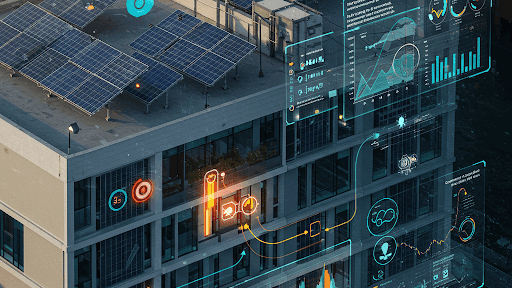
Understanding the Architecture of Integrated Building Management Systems
The architecture of an integrated building management system extends far beyond simple device connectivity. The fundamental framework of the system will consist of various layers that will collaborate to provide detailed monitoring of the facilities. The field layer is comprised of sensors, actuators and controllers which are entrenched into the building structure. These gadgets are able to constantly check indicators like temperature, humidity, air quality, occupancy and power usage. This data is processed by automation layer, which implements control strategies and reacts to programmed logic, which controls system behavior. Lastly, the management layer gives the human-machine interface upon which operators view the performance metrics, setpoints and automation routine settings.
Modern building systems management platforms leverage open protocols such as BACnet, LonWorks, and Modbus to ensure interoperability between equipment from different manufacturers. This protocol agnostic method will avoid the problem of vendor lock-in and supporting incremental system expansions. The integration spreads to IT infrastructure too where modern systems contain RESTful interfaces, SNMP integration and cloud support allowing data to flow freely between the system and enterprise resource planning systems, energy management systems and business intelligence tools. This integration of operation technology and information technology develops strong synergies that goes beyond the traditional building automation ability.
The implementation of an integrated building management system also involves establishing robust network infrastructure capable of handling the substantial data flows generated by connected devices. Most installations rely on the Ethernet networks which are the source of bandwidth and redundancy required in real-time management and monitoring. Nonetheless, wireless systems, including Wi-Fi, Zigbee and LoRaWAN, are becoming used in retrofit and in those locations where cabling is not feasible. The security factor is the most crucial and the adoption of VLANs, firewalls, and encrypted communication software prevents important building systems against cyber threats that may endanger and disrupt the operations of the building or the safety of the occupants.
Strategic Planning for Implementation Success

The journey toward implementing an integrated building management system begins long before the first controller is installed. Extensive auditing of facilities helps in finding out the current equipment, communication protocols, and control strategies that have been implemented. In this evaluation, there will be an opportunity to integrate and a possible setback that might affect the project schedules or budgets. The involvement of stakeholders is also most important; facility managers, maintenance staff, IT departments, occupants of buildings, and others, all have their opinions that should be reflected in system design. Their contribution will mean that the end-implementation approach will tackle practical business issues as opposed to theoretical opportunities.
Developing a detailed specification document establishes clear expectations for building automation and energy management systems functionality. The essential attributes in this document need to be performance requirements, integration points, communication standards, reporting capabilities, and user interface expectations. It must also cover the needs of cybersecurity, data ownership policies, and vendor support policies. An effective specification forms the basis of evaluation of the vendor and becomes the contractual basis of delivery of the system. Including provisions for future expandability ensures the integrated building management system can accommodate additional devices, subsystems, or functionality as building needs evolve.
Older strategies of phased implementation can be more successfully handled than a single-attempt deployment that is full speed ahead. The use of critical systems, including HVAC and lighting, is a starting point of the core foundation where it proves the benefit, which can be tangible and thus enhances organizational support. The later stages may include security systems, fire safety equipment, and purpose-specific subsystems of the facility operation. This strategy, as well, enables operators to become familiar with the system over time, eliminating the learning curve, and causing minimal benefit to operational disturbances. At the end of every phase, there is supposed to be commissioning activities which are done to approve the proper integration, sequence to the control validations and performance verification to the specification requirements.
Leveraging Building Automation and Energy Management Systems for Efficiency
Energy consumption represents one of the largest operational expenses for commercial and industrial facilities. Building automation and energy management systems within the integrated building management system framework provide powerful tools for reducing consumption without sacrificing comfort or productivity. Advanced control algorithms optimize equipment operation based on occupancy schedules, outdoor air temperature, and utility rate structures. Demand response capabilities automatically shed non-critical loads during peak pricing periods, significantly reducing electricity costs. Real-time energy monitoring identifies consumption anomalies that may indicate equipment malfunction or operational inefficiencies requiring attention.
The integration of renewable energy sources and energy storage systems adds complexity that an integrated building management system is uniquely positioned to manage. Solar photovoltaic arrays, battery storage banks and backup generators should be synchronized in line with maximizing the use of renewable energy and at the same time provide reliable power supply. Such a system will be able to execute more advanced strategies of load management which will focus on the production of renewable energy, charging batteries at off-peak times, and providing a smooth transition to the backup power in case of grid outages. These qualities are even more important when facilities aim at sustainability certification and carbon neutrality ambitions, which need to be recorded in terms of energy performance enhancement.
Smart building energy management extends beyond simple consumption reduction to encompass comprehensive resource optimization. The water consumption is monitored and identifies the risks of leakages and overuse. Pumps, compressed air systems and process equipment can be sequence planned to reduce peak demand without reducing production demand. Thermal energy storage systems exchange the cooling loads to off-peak periods when electricity rates are cheap. The integrated building management system orchestrates these diverse systems, balancing competing objectives to achieve optimal overall performance. Analytics engines are an analysis of historical data to determine trends, compare performance against bestseller standards, and suggest areas of improvement that should be improved to achieve quantifiable outcomes.
Integration Challenges and Technical Considerations
Despite the compelling benefits, implementing an integrated building management system presents several technical challenges that require careful navigation. The old equipment that uses proprietary communication protocols might be difficult to integrate with, requiring protocol gateways or substitution with compatible equipment. As the number of IoT devices grows, the complexity of networks grows and poses a possible threat to the security, which should be mitigated through network segmentation and access regulations. This is because data management is made more complicated as the amount of information produced by connected devices grows exponentially and demands a strong database system and policies on data storing.
System scalability considerations influence architectural decisions made during initial implementation. Will the building systems management platform accommodate future expansion to additional buildings or facilities? Can the network infrastructure support thousands of additional data points without performance degradation? These questions should inform equipment selection and system design to avoid costly rearchitecture down the road. Cloud-based platforms offer attractive scalability characteristics but introduce dependency on internet connectivity and raise questions about data sovereignty and vendor stability that must be carefully evaluated.
The human factors associated with integrated building management system deployment often receive insufficient attention during planning phases. Those operators, who are used to discrete systems might be willing to adopt new platforms that need new abilities and workflows to use. Training programs must not be limited to how to operate the system but also how to do troubleshooting procedures, handling alarms, and on the ability to report, etc. The continuous support systems allow operators to receive support when there are some situations that are not familiar and where they need to adopt the advanced functionality. Change management processes assist the organization in adjusting to the cultural changes that come with a technological change.
Optimizing Operations Through Advanced Analytics
The true power of an integrated building management system emerges when advanced analytics transform raw operational data into actionable intelligence. Algorithms are used to check the performance of the equipment and detect trends that indicate degradation before any failure is detected. Such predictive maintenance services can also transform organizations and change their innovative approaches to reactive repair implementation to proactive intervention measures, which can prolong the life of equipment and reduce unnecessary downtime. The machine learning models can be used to apply optimal control strategies with regard to the past-performance data through automatic tuning of the setpoints and schedules and therefore lowering the energy utilization and keeping the comfort conditions.
Benchmarking capabilities within building automation and energy management systems enable performance comparisons across multiple facilities or against industry standards. Facility managers can have an idea of which buildings are performing optimally and which ones need attention. The identification of anomalies is achieved using anomaly detection algorithms that identify irregular patterns of consumption or equipment behavior which can be treated as indicators of a problem that needs investigation. These analytical capabilities transform the integrated building management system from a monitoring and control platform into a strategic asset that drives continuous operational improvement.
Visualization tools make complex operational data accessible to stakeholders at all levels of the organization. Executive dashboards present high-level key performance indicators such as energy intensity, maintenance costs, and carbon emissions. Facility managers access detailed system performance metrics and alarm histories. Maintenance technicians receive work orders automatically generated based on predictive maintenance algorithms. This layered approach to information delivery ensures each stakeholder receives relevant, actionable intelligence appropriate to their role and responsibilities within the organization.
Future-Proofing Your Building Management Infrastructure
The pace of technological change shows no signs of slowing, making future-readiness a critical consideration when implementing an integrated building management system. Robot algorithms and machine learning applications will continue to enhance the decision-making process of humans, helping to automate automatic optimization processes and detect complex patterns, which are not readily apparent in the traditional mode of analysis. Digital twin technology will be a way of advanced simulation and scenario modeling, which will allow operators to experiment with control strategies virtually in case they do not fit. The blockchain applications can offer improved security and auditing of important building data and transaction documentation.
The convergence of smart building energy management with grid modernization initiatives creates opportunities for facilities to participate in demand response programs, provide grid services, and monetize flexible load capabilities. Integrated building management systems will serve as the enabling platform for these interactions, managing complex negotiations between building energy requirements and grid operator requests. With the changing regulatory structures to facilitate such interactions, facilities that have an improved management system will be in a good position to take advantage of the new sources of revenue.
The expectations regarding sustainability reporting are growing, and more focus is put on proven energy performance information and carbon accountability. An integrated building management system provides the metering infrastructure and data management capabilities necessary to meet these reporting obligations efficiently. Auto-generated reports, third-party verification features and compliance monitoring features will become a standard feature of building systems management platforms. Organizations that invest in complex integration today do so to be in a position to comply with the regulatory needs in the future, with very minimal extra effort or cost.
Making the Strategic Decision
The decision to implement an integrated building management system represents a significant strategic investment that extends beyond simple equipment procurement. It is the dedication to operational excellence, sustainability leadership, and technological innovation, which will have an impact on the facility performance over decades. The holistic approach of such systems demands organizational preparedness, stakeholder congruency, and tech-knowledge that one should not undermine. Nevertheless, to enable facilities taking an optimistic approach on performance, lower the operations cost and having a competitive edge by having better building operations, the question will not be whether to have such systems or not but why not have it as soon as possible.
Success requires selecting implementation partners with demonstrated expertise in building automation and energy management systems integration. The complexity of modern integrated building management systems demands technical proficiency across multiple disciplines, including electrical engineering, network architecture, control systems programming, and cybersecurity. Experienced integrators bring invaluable insights gained from previous projects, helping organizations avoid common pitfalls and implement best practices that accelerate time to value. Their ongoing support ensures systems continue performing optimally long after initial commissioning activities conclude.
The return on investment for integrated building management system implementation typically manifests across multiple dimensions. Energy cost reductions often provide the most visible financial benefits, with many facilities achieving 20-30% consumption reductions following optimization. Maintenance cost savings result from predictive capabilities that prevent costly emergency repairs and extend equipment operating life. Improved occupant comfort and productivity deliver less quantifiable but equally important benefits that enhance facility reputation and tenant satisfaction. When evaluated holistically, these combined benefits typically justify the initial investment within three to five years, delivering sustained value throughout the system’s operational lifespan.
Conclusion
The evolution from standalone building systems to full-blown integrated building management systems has to be one of the most significant advancements in facility management in the past few decades. Don’t get me wrong, the technical hurdles of deploying an integrated building management system shouldn’t be taken lightly, but they shouldn’t hold you back either. With some decent planning, the right implementation partners, and a genuine organizational commitment, the technical challenges are definitely manageable. What’s really worth it is that facilities, regardless of size or how complicated they are, can make a very successful transition to a fully-integrated operations setup. The fact is that the improvements in energy efficiency, day to day operational reliability and occupant satisfaction pay for the investment many times over while also letting organisations stay on top of emerging technology and shifting market conditions.
With over 75 years of experience delivering electrical engineering solutions across East Africa, IET has established itself as the region’s premier provider of comprehensive building automation and energy management systems. Our expertise spans the complete spectrum of integrated building management system implementation, from initial assessment and system design through installation, commissioning, and ongoing support. We understand the unique challenges facing facilities in Kenya, Uganda, and Tanzania, and we deliver solutions tailored to regional requirements and constraints. Contact IET today to discover how our smart building energy management solutions can transform your facility’s performance, reduce operating costs, and position your organization for long-term success in an increasingly competitive marketplace.