
The nature of industrial manufacturing processes requires the highest levels of electrical reliability such that even short-lived power outages can lead to massive losses of production and damage of equipment. Lv mv electrical switchgear is the core of this electrification system, the latest control and protection system, which is used to supply electricity in the whole manufacturing facility. These fundamental elements are linked to the brain of the industrial electrical networks which will organize the flow of power and which will ensure the required protection of the failures of electricity and malfunctions of work.
Modern manufacturing processes have increased the significance of the lv mv electrical switchgear past the rudimentary switching capabilities. The current installations are combined with high features of tracking operations, high predictive maintenance and intelligence of the control system that is also the safest among all. Operational excellence and bottom-line performance will directly depend upon the capability to understand the capabilities of these systems and the most optimal method to deploy the latter.
These progressive electrical distribution systems are applied in manufacturing facilities of different industries to ensure that all production processes remain within a continuous cycle, to invest in costly equipment and to ensure the protection of the employees. The choice and deployment of the right switchgear solutions can be the difference between a seamless operation process and an expensive downtime incident that spills over to whole supply chains.
Understanding Modern Switchgear Architecture
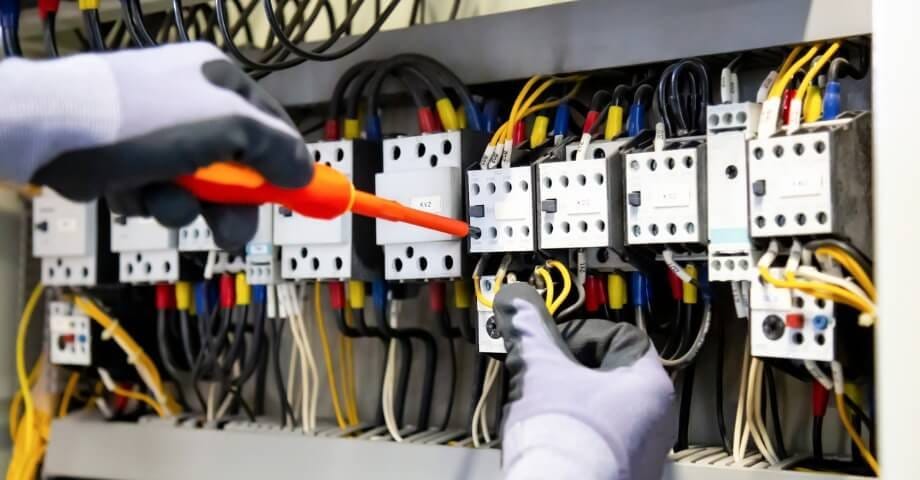
What then is electrical switchgear in relation to industrial manufacturing? In its simplest form, switchgear is a combination of electrical disconnect switches, fuses, circuit breakers to operate, protect, and isolate electrical equipment. But, current industrial uses require much more advanced features than this simple definition would imply.
Modern switchgear electrical systems are designed with intelligent protection schemes, extensive monitoring and complex communication protocols, which allow a smooth integration with facility management systems. These installations must be able to operate with complex load profiles, deliver the capacity to alternate frequently, and be able to operate consistently under hostile industrial environmental circumstances.
The creation of digital protection and control platforms instead of clunky electromechanical systems has revolutionized switchgear. Modern installations provide real time power quality and harmonic analysis and energy consumption measurements that can support operational choices using data. This technological breakthrough allows manufacturing operations to maximize energy consumption and still achieve the levels of reliability required by the continuous production processes.
Low Voltage vs Medium Voltage Applications
LV/ MV electric switchgear systems possess one hundred percent different applications and are specialized to certain voltages and usage. Low voltage switchgear typically work with distribution voltages up to 1000 V AC, and serve final distribution circuits, which feed individual production equipment and lighting systems and facility infrastructure.
Medium voltage systems operate in distribution voltages of 1kV to 35kV, and are often the main backbone of distribution in large manufacturing plants. These systems are powered by utility sources and feed power to other production areas and support systems via facility transformation systems.
The interaction between LV and MV systems form on-demand orchestrated distribution architectures that are operationally flexible. It is necessary to coordinate properly between voltage levels to provide selective operation of protection and to reduce the effect of local faults on the operation of the entire facility.
Critical Design Considerations for Manufacturing Applications
The design of industrial electrical switchgear boxes must address the special requirements of manufacturing processes, where extreme conditions, heavy switching, and variable loads subject equipment to stress. The temperature, humidity, and levels of contamination are all environmental factors that determine the choice and specification of switchgear.
Problems in the design of switchgear are unique to motor starting applications because large induction motors cause large inrush currents that can overly stress distribution systems. Intelligent motor control centers are built into advanced switchgear installations to optimize starting sequences and to guard both motors and distribution equipment against excessive stress conditions.
Considerations of power quality have become important because manufacturing processes are becoming more sensitive to voltage variations, harmonics and other electrical disturbances. Newer switchgear systems incorporate power quality measurement and correction features that ensure stable electrical conditions to delicate production devices.
Protection Scheme Optimization
Selective coordination is one of the basic needs of industrial switchgear installations, in which each circuit breaker is activated only in cases of abnormal conditions and only the circuit breaker nearest to a fault is activated. Such selectivity reduces loss of production and ensures that personnel are kept safe within the facility.
The mitigation of arc flash has now become a vital design factor as people have become more conscious about safety issues in the workplace. New switchgear models have arc-resistant enclosures, remote control, and lower-energy maintenance processes which minimize on-the-job exposure of personnel to electrical hazards.
Ground fault protection schemes should be able to accommodate the grounding philosophy used in industrial systems along with the required sensitivity to protect personnel. Grounded systems with high resistance are typical of industrial applications, and demand protection methods that are very different in nature than utility distribution practice.
Advanced Control and Monitoring Systems
Lv mv electrical switchgear capabilities have been revolutionized with digital protection and control systems that are thoroughly, fully, monitored and automated response functionality that is far superior to electromechanical relay capabilities. These systems constantly monitor electrical parameters in order to take corrective actions based on predictive maintenance policies that prevent expensive unscheduled failures.
In order to allow seamless interface with the facility management systems which are used to centralize the monitoring and control of the system, Modbus, DNP3 and IEC 61850 communication standards are used. This integration can help streamline the energy management policies, and it also minimizes the number of staff needed to regularly monitor the system.
Data analytics tools take large amounts of operational data and transform it to define performance pattern and maintainability requirements. The machine learning algorithms keep improving their predictive performance to allow scheduling of maintenance and maximize the use of resources in the manufacturing processes.
Energy Management Integration
Smart grid technologies are changing the way that industries manage their energy source by offering superior monitoring and control features built into switchgear devices. Energy consumption monitoring in real-time makes it possible to implement demand response participation and time-of-use optimization mechanisms that minimize operational costs.
Switchgear installations fitted with power factor correction systems, automatically operate to maintain optimum power factor levels and help reduce utility demand charges, as well as enhance system efficiency. Capacitors that are switched to load states are synchronized by high-tech systems that provide a constant voltage profile under various working conditions.
One of the features that provide the automatic response to the disruption of the utility supply that helps to provide the continuation of the key manufacturing processes and reduce the non-key loads is the load shedding. These systems are designed to rank loads according to the needs of production, so that when supplies are limited, the important processes are not halted.
Maintenance Strategies and Reliability Optimization
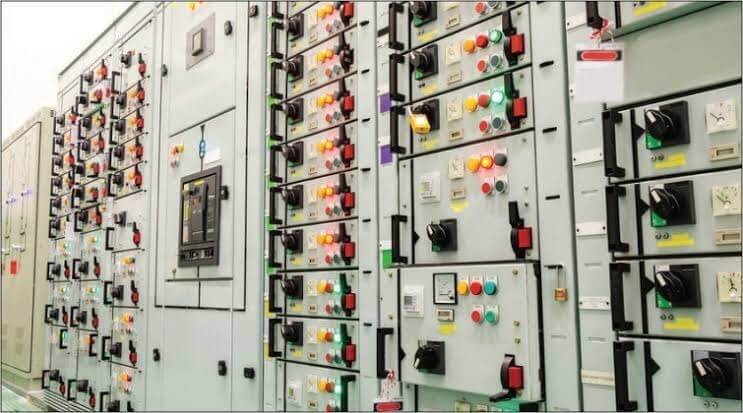
The electrical switchgear box installation preventive maintenance programs should strike a balance between operational needs and equipment reliability needs. Maintenance approaches that are time based are being supplanted with condition based approaches that time maintenance based on actual equipment condition, as opposed to a fixed schedule.
The thermographic inspection programs detect the connection issues as they arise prior to failures. Through these non-invasive diagnostic methods, hot spots that signify connection degradation or poor contact pressure can be identified early on. Periodical thermal surveys are a part and parcel of an encompassing maintenance program.
Partial discharge testing offers early warning of insulation system degradation, and thus allows prior replacement of parts before service failure occurs. MV installations in particular, are a perfect application of this type of testing because the safety and the reliability of the insulation systems directly depends on the integrity of the insulation system.
Condition Monitoring Technologies
Constant monitors identify the state of switchgear through a variety of measurement parameters including temperature, humidity and gas concentrations. Medium voltage installations use SF6 gas monitoring to maintain sufficient insulation gas levels and to warn operators about the possible leak conditions that may jeopardize safety.
Early detection of mechanical issues that may lead to failure of operation is achieved through vibration monitoring of the operating mechanisms. They are systems that search frequency bands with the intention of locating some degradation pattern of components that can be used to carry out maintenance procedures in order to avoid the expensive forced outages.
Measurement of contact resistance can be used to detect an emergent connection issue in switching devices, allowing preventive maintenance to be performed before contacts deteriorate to failure limits. It is also one of the most critical monitoring plants when it comes to uniform switching behaviour in high frequency installations.
Economic Optimization and Lifecycle Management
Switchgear electrical installations total cost of ownership analysis should consider the initial capital cost, installation costs, maintenance costs, and effects of operations over the service life of the equipment. This holistic thinking often demonstrates that equipment of a higher quality and with better reliability properties has much greater long-term value even though it costs more in the short-term.
Energy efficiency factors will influence the choice of equipment and the choice of operational strategies. Modern switchgear designs reduce losses and offer sophisticated power control features that maximize energy consumption in the facility. The features help in the sustainability programs under the minimum operational costs.
The availability of spare parts and supplier support services have a substantial influence on the overall cost of operations over time. Presence of local suppliers is especially important in emergency restoration work when speed in parts supply can reduce disruptions in production.
Future-Proofing Strategies
The development of technology has been changing the functions of switchgear by incorporating IoT sensors and artificial intelligence. These technologies allow unprecedented access to equipment status and performance in addition to supporting sophisticated facility management applications.
The security of a cyber system has become more of a concern due to an increased integration of switchgear systems to facility networks. Proper security implementation not only secures the critical infrastructure, but also provides the connectivity to support advanced monitoring and control functions.
Switchgear installations incorporate features like modularity and expandability to allow future expansions of the facility without necessarily having to replace the entire system. This comes in handy particularly in dynamic manufacturing environments where manufacturing requirements keep on changing.
Installation and Commissioning Excellence
Appropriate installation procedures have direct effects on the performance of switchgear across the duration of its operation. The foundation design, cable installation methods and protection of the environment is one factor that should be taken care of when constructing it. Installation crews are well aware of these needs and they can offer appropriate solutions to these needs that will be long-term effective.
Commissioning procedures are done to ensure that appropriate system integration and installation is completed before energization. The insulation resistance, functional checks of the protection system and mechanical operation are included in extensive test procedures. These steps reduce the risk of startup and also set baseline performance data on which to base maintenance operations in the future.
The industrial installations documentation requirements should be able to support both operational requirements and regulatory requirements. Detailed as-built drawings, documentation of protection settings and maintenance procedures ensure that the facility staff can successfully operate and service switchgear systems over the course of their service life.
Integration with Existing Systems
Upgrading the current facilities with new switchgear systems must be done under close coordination with current production processes. The integration of the implementation strategies reduces the impact of discontinuation of production and increases reliability and functionality. Trained installers can come up with elaborate cutover processes that reduce the effect of downtime.
Issues of compatibility between new and existing equipment must be carefully analysed at design stages. Protection coordination studies allow correct operation of the system and selectivity in all mixed-vintage installations. These research studies are significant because reliability of systems when there is a transition period is consistent.
Facility personnel training programs provide effective operation and maintenance of new switchgear systems. Extensive training deals with normal operation, emergency and simple troubleshooting methods that facilitate speedy reaction to operational problems.
Conclusion
The implementation of lv mv electrical switchgear systems has a direct impact on the manufacturing operational excellence, safety performance, and economic performance. The newest state-of-the-art installations provide greater power distribution optimization, equipment protection, and energy management than ever before, which translates into competitive advantages to progressive manufacturers.
The modern competitive manufacturing environment requires an electrical infrastructure capable of supporting the current and future development. Combination of modern protection systems, condition monitoring technologies, and intelligent control capabilities opens up opportunities of optimization of operations far beyond the scope of simple power distribution functions.
Over the last 70 years, IET has built itself as the most preferred supplier of electrical switchgear solution to industrial and manufacturing processes in Kenya, Uganda and Tanzania. Our overall knowledge of the design, installation and commissioning of lv mv electrical switchgear, in combination with our large stock of inspection equipment and our own workshop facilities, will guarantee that your manufacturing operation is occurring at optimum electrical system performance and reliability. Today, call IET to find out how our long history of executing challenging industrial projects can reverse the electrical infrastructure of your facility and bring operative efficiency to your manufacturing facility.