
Industrial facilities everywhere are facing an uncomfortable truth: older HVAC systems are costly and their inefficiencies are multiplying by the day. While many plant supervisors pay attention to streamlining the production line, one of the most profound operational expense drainer often gets overlooked. With the right optimization, predictive maintenance becomes truly intelligent. A comprehensive building management system for HVAC operations solves the issue.
For regulatory compliance, equipment lifespan, and for the device’s integrity, the modern industrial ecosystem needs precise control over the equipment’s environment. Comfort is merely one of the needs. Still, so many facilities continue to work with outdated control systems, wasting energy and air quality, while creating maintenance nightmares that are so easy to prevent.
As an example, HVAC systems are responsible for 40 to 50 percent of energy consumption. Without intelligent HVAC automation, HVAC systems and equipment are redundantly cycled to unimaginably proactive but unsynchronized and inefficient levels. Utility expenses and equipment degradation are costly, but the most devastating outcome is a production halt. Facility managers have less and less appetite to incur these mounting, costly expenses.
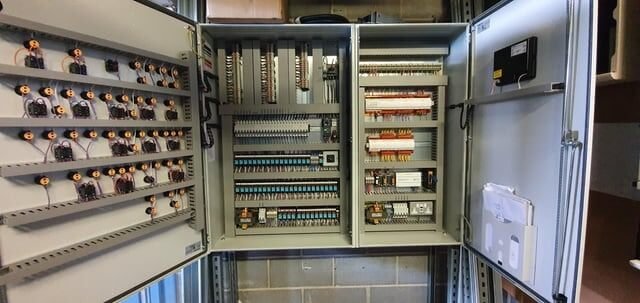
The Operational Reality of Modern Industrial HVAC Demands
Over the last ten years, many facilities have adapted industrial processes to use new technology. However, they still rely on HVAC systems (Heating, Ventilation, and Air Conditioning systems) designed for simpler operations. Modern manufacturing environments frequently use temperature-sensitive electronic equipment and have strict air quality standards alongside temperature-controlled processes. These standards need precise and sophisticated environmental control.
The complexity of modern HVAC systems is solved with building management systems that provide real-time monitoring and automated feedback to changing environmental conditions. These systems are constructed to manage complex environments without the need for manual interventions. They improve operation efficiency by taking into account a combination of numerous factors such as occupancy, weather conditions, production schedules, and equipment heat loads.
Modern systems have the capability of integrating HVAC operations with other facility systems. When production equipment introduces unplanned heat loads, HVAC systems respond by automatically adjusting the cooling capacity. They also save energy by reducing the consumption of readily available energy during scheduled maintenance shutdowns while still protecting equipment from the environmental conditions.
Advanced Automation HVAC controls provide facility managers with powerful energy management tools by enabling real-time monitoring of energy consumption and energy efficiency for the entire building. These tools are able to automatically calculate energy performance indicators for HVAC systems, enabling more precise monitoring when paired with real-time monitoring.
Real-Time Monitoring and Control Capabilities
Effective HVAC automation starts with a sensor network that gives ongoing feedback on the facility’s environmental conditions. These sensors track the temperatures and humidity levels in addition to measuring the air quality, the overall performance of the equipment, and the energy consumption in the facility.
Centralized control systems receive this data and in turn, make thousands of micro adjustments using the temperature and humidity control, air flow, and energy usage settings of the HVAC systems to ensure optimal conditions while energy consumption is kept as low as possible. The system “learns” with experience, using operational patterns to identify for the system areas where greater efficiency could be achieved and automating the adjustments to the equipment to reduce workloads.
The ability to monitor HVAC systems remotely allows facility managers to track operations from anywhere, receiving real-time notifications for equipment malfunctions, filter changes, or other system inefficiencies. By intervening before small problems escalate, the system averts increased spend and greater production halts.
Energy Optimization Through Intelligent Automation
Managing energy consumption is the primary focus for justifying the financial cost of systems. These systems utilize intelligent algorithms that analyze energy efficiency and the comfort of facility occupants to adjust the operations of HVAC equipment in real-time.
Integrating variable frequency drives with building management systems enhances the control of fans, pumps, and compressors, enabling automation of precise operation cycles. Equipment no longer functions at fixed speeds during heating or cooling periods. Instead, it works at requirements during partial load conditions, which significantly reduces the energy consumed.
In addition, building management systems have pre-set strategies to reduce energy consumption. This plays an important role in enabling facilities to participate in utility programs that offer financial compensation for energy reduction during peak load periods. These programs incentivize demand response capabilities.
Preventive Maintenance Revolution Through Smart Systems
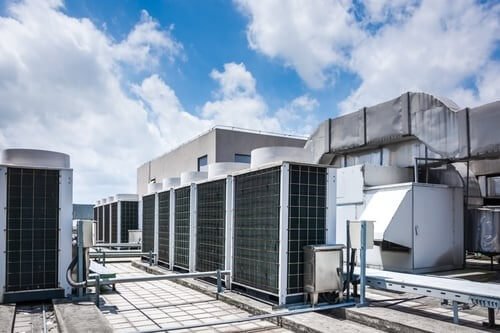
Traditional HVAC maintenance relies heavily on scheduled service intervals based on manufacturer recommendations or historical experience. This approach often results in premature component replacement or unexpected equipment failures that disrupt operations when least convenient.
Building management system maintenance transforms this reactive approach into predictive intelligence that monitors equipment health continuously. Vibration sensors detect bearing wear before catastrophic failure occurs. Current monitoring identifies motor inefficiencies that indicate impending problems. Filter pressure differentials trigger replacement alerts based on actual conditions rather than arbitrary time intervals.
The financial impact extends beyond maintenance cost reduction. Predictive maintenance prevents production disruptions caused by unexpected HVAC failures, particularly critical in processes requiring precise environmental control. Equipment operates more efficiently when maintained based on actual condition rather than arbitrary schedules, extending useful life and reducing replacement costs.
Data-Driven Maintenance Scheduling
Advanced building management systems collect operational data that reveals equipment performance trends over time. This historical analysis enables maintenance teams to identify patterns that predict component failures, optimize service intervals, and stock appropriate spare parts based on actual usage patterns.
Integration with computerized maintenance management systems streamlines work order generation, parts ordering, and technician scheduling. When the system detects a developing problem, it automatically generates appropriate maintenance requests with detailed diagnostic information that helps technicians prepare for efficient repairs.
Performance benchmarking capabilities compare current equipment operation against historical baselines, identifying gradual degradation that might otherwise go unnoticed until complete failure occurs. This early warning system enables proactive intervention that prevents costly emergency repairs and production disruptions.
Compliance and Indoor Air Quality Management
Modern industrial facilities face increasingly stringent regulations regarding indoor air quality, employee safety, and environmental impact. Manual monitoring and control systems struggle to maintain consistent compliance with these evolving requirements, creating legal and financial risks that automated systems effectively eliminate.
HVAC automation controls continuously monitor air quality parameters including particulates, volatile organic compounds, and humidity levels that affect both product quality and employee health. Automatic ventilation adjustments maintain optimal air exchange rates without over-ventilating spaces, which wastes energy while failing to address localized air quality issues.
Documentation requirements for regulatory compliance become manageable through automated data logging and report generation. Rather than relying on manual readings that may be inconsistent or incomplete, the system maintains comprehensive records that demonstrate ongoing compliance with applicable standards.
Emergency response capabilities ensure appropriate ventilation adjustments during chemical spills, equipment malfunctions, or other incidents that could compromise air quality. The system can isolate affected areas, increase exhaust ventilation, or implement other protective measures automatically, protecting personnel while minimizing business disruption.
Integration with Safety Systems
Building management systems integrate seamlessly with fire protection, security, and emergency notification systems to provide coordinated responses during critical situations. When fire alarm systems activate, HVAC controls automatically adjust air handling to prevent smoke spread while maintaining safe egress routes.
Chemical detection systems trigger appropriate ventilation responses that contain hazardous atmospheres while protecting personnel in adjacent areas. These coordinated responses happen faster and more reliably than manual procedures, potentially preventing minor incidents from escalating into major emergencies.
Return on Investment Analysis
The financial justification for implementing comprehensive HVAC building management systems typically extends far beyond simple energy savings, though these alone often justify the investment within 2-3 years. Reduced maintenance costs, improved equipment reliability, and enhanced regulatory compliance create additional value streams that accelerate payback periods.
Energy cost reductions typically range from 15-30% of total HVAC operating costs, depending on existing system efficiency and operational patterns. For large industrial facilities, this translates to tens of thousands of dollars annually in utility cost savings that compound over the system’s operational life.
Maintenance cost reductions result from both reduced emergency repairs and optimized service intervals based on actual equipment condition rather than arbitrary schedules. Equipment operates more efficiently and lasts longer when maintained proactively, reducing both operating costs and capital replacement requirements.
Productivity improvements often provide the most significant financial benefits, though they’re sometimes difficult to quantify directly. Consistent environmental conditions improve employee comfort and reduce sick leave related to poor indoor air quality. Process equipment operates more reliably when environmental conditions remain within optimal parameters, reducing product defects and production delays.
Long-Term Value Creation
In addition to building operational performance, the building management system creates a base for future improvements and technology integration. As IoT technologies evolve, more sophisticated building management systems can be utilized for advanced data analytics and AI, as well as integration with ERP systems.
Improvement in energy efficiency and reduced operational costs increases the attractiveness of the facilities to potential buyers or tenants, thus benefiting property value. Comprehensive environmental monitoring and control systems that enable the demonstrable sustainability tracking required to earn green building certifications helps achieve them.
Implementation Considerations for Industrial Environments
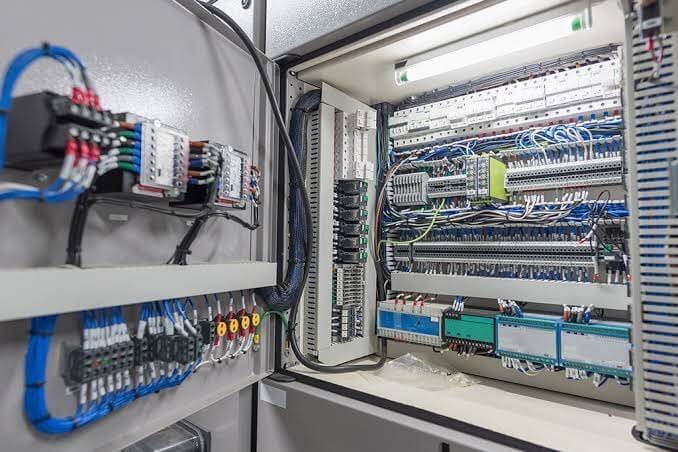
When implementing Building Management Systems (BMS) for Industrial Environments, there are many factors to consider, such as the overheating of equipment, risk of chemical exposure, and 24/7 operational schedules. These issues pose unique challenges that are rarely addressed by generic commercial systems.
In operations that are the life- and safety-critical systems, HVAC controls are extremely pivotal. Systems that automatically detect and respond to equipment failures and power disruptions, and utilize backup controls, emerge as vital HVAC redundancy solutions.
Building Management Systems BMS Security has become a primary concern for corporations with the rise of cyberspace. Industrial facilities often deal with sensitive information, and critical infrastructure, and thus require robust protective measures to shield them from unauthorized access, manipulation, or anything that would breach sensitive data.
Integration with the current systems of the facility requires thorough forethought to avoid halting operations. The stepwise system activation will train the staff on the technology while guaranteeing that the day-to-day routines are not interrupted.
The threat of increased operational costs, challenges in maintenance, or difficulties in complying with regulations due to loss of intelligent building management systems, is critical. In these systems, the industrial landscape is revolutionizing automation, efficiency, and sustainability.
For more than 75 years, IET has been providing cutting-edge solutions in electrical engineering all over East Africa, specializing in building management systems and HVAC automation. With a wealth of knowledge and experience, IET understands the distinct needs of industrial plants in Kenya, Uganda, and Tanzania. IET has building automation solutions that will increase your facility’s operational efficiency and decrease long-term costs. Get in touch today to learn more about our tailored services and further develop your industrial facility.