
The rising costs and heightened awareness of environmental issues have made building management system lighting control systems a key technology for modern commercial and industrial facilities. With lighting consuming about 20-40% of a building’s energy, using sophisticated control systems gives businesses the greatest opportunity to incur less operational costs, while improving employee comfort and productivity.
Today’s commercial buildings demand more than basic on–off switches. They require intelligent systems that can adapt to occupancy, daylight availability, and operational requirements. This transformation has tremendous impacts on energy management and lighting design, which in turn, can help businesses save operational costs and improve the building’s environmental performance. This transformation has tremendous impacts on energy management and lighting design, which in turn, can help businesses save operational costs and improve the building’s environmental performance.

The Foundation of Intelligent Lighting Control Systems
Today’s building management system lighting control systems work on the principle of dynamic responsiveness. Unlike static lighting systems, modern solutions continually observe the environment and occupancy and adjust to optimize energy use without sacrificing ease of use or comfort.
The primary elements include occupancy and photosensors, control programming, and communication networks working together. Occupancy sensors detect a human presence and automatically adjust lighting levels. Photosensors detect ambient light and can reduce artificial lighting when sufficient daylight is present.The advent of Digital Addressable Lighting Interface (DALI) protocols and wireless technologies has brought a new level of flexibility to systems. These protocols support control of individual fixtures, which allows lighting to be adjusted as per the requirements of a particular zone. This provides a fine-tuned level of control over energy management and can suit the varying needs of different spaces in the same building.
Efficiency can be further improved with zone-based control systems which partition a building into intuitive larger areas having uniform usage. These zones can be open offices, conference rooms, corridors, and even storage rooms, all of which have specific lighting needs that can be efficiently catered to through sophisticated automation.
Advanced Control Strategies and Technologies
Daylight Harvesting Integration
Integrated building management systems have proven to be the most efficient when it comes to harnessing natural light through sophisticated daylight harvesting methods. These types of systems adjust the level of artificial light to be used based on the amount of natural light available. They monitor outer light levels and increase daylight as much as possible while maintaining a constant level of illumination and, most importantly, reducing energy usage.
The system uses photosensors that gauge light levels both inside and outside the building. The advanced algorithms then calculate the required dimming level for each zone based on the photosensors’ real-time data. This method can reduce energy used for lighting by 30-50% in perimeter zones that have enough windows.
Automatic seasonal adjustments guarantee year-round optimization. The system learns patterns of daylight availability during different seasons and modifies control algorithms automatically. Adaptive capabilities like these free the user from the burden of having to manually change the control programming in response to different environmental conditions.
Occupancy-Based Control Systems
Occupancy detection has become sophisticated and therefore to simplistic motion sensing. Current systems integrate dual-technology sensors that utilize passive infrared detection in conjunction with ultrasonic or microwave detection to mitigate false activations while assuring dependable occupancy detection.
In spaces with a fluctuating number of people, time-delay settings help avoid excessive switching. Different zones require different strategies of timing- a private office may keep the lights on for 10 minutes after the last detected motion, while a storage room may turn off after 2 minutes.
An advanced control strategy for large spaces is known as partial occupancy control. Instead of turning on lights for entire zones that are only partially occupied, the system has the ability to illuminate certain zones that have been occupied based on detected occupancy patterns. This strategy is ideal for warehouses, large retail spaces, and open offices.
Energy Savings and Return on Investment Analysis
A detailed analysis of the building lighting system and energy management systems reveals that their implementation is not only beneficial in terms of energy savings but also provides a financial return that goes beyond ordinary operational energy savings. A building management system (BMS) allows for a lighting control system (LCS) which integrates the lights with the rest of the building systems, yielding multi-dimensional value streams which altogether build the ROI (return of the investment).
When it comes to direct savings, the figure usually falls between 20% to 60% due to the existing lighting system and its controllability sophistication. Typically, the facilities with the oldest lighting systems coupled with the least amount of existing controls tend to obtain the most savings. The figure directly depends on the occupancy patterns, daylight savings, and operational schedules.
Another major benefit to cost saving includes the reduction of demand charge. Commercial electricity bills usually have a demand charge on peak power usage. Intelligent lighting control systems tend to lower peak demand by using load-shedding strategies during peak times.
Maintenance cost reductions occur through several mechanisms:
- Extended lamp life due to reduced operating hours
- Predictive maintenance capabilities that identify failing components before complete failure
- Reduced labor costs through centralized monitoring and control
- Improved system reliability through continuous monitoring
The typical payback period for comprehensive lighting control systems ranges from 2-5 years, with many installations achieving payback in under 3 years when energy rebates and incentives are factored into the analysis.
Integration with Building Automation Systems
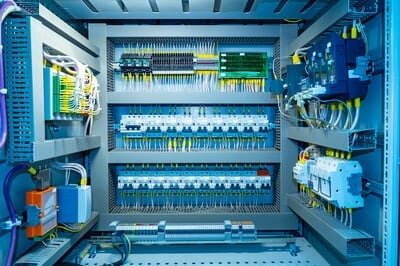
Intelligent building management system integration creates synergies that amplify energy savings and operational efficiency. When lighting control systems communicate with HVAC, security, and fire safety systems, buildings can achieve coordinated responses that optimize overall building performance.
Thermal load coordination represents a significant opportunity. Reducing lighting loads decreases cooling requirements during hot periods, creating compound energy savings. Advanced systems can predict cooling load changes based on planned lighting adjustments and pre-emptively modify HVAC operation accordingly.
Security system integration enables sophisticated after-hours control strategies. When security systems indicate building occupancy outside normal hours, lighting systems can activate only in occupied areas while maintaining minimal lighting in unoccupied zones for security purposes.
Fire safety integration ensures code compliance while maintaining energy efficiency. During emergency conditions, lighting control systems can override energy-saving settings to provide full illumination for safe egress while coordinating with emergency lighting systems.
Data Analytics and Performance Monitoring
Modern lighting control systems generate substantial amounts of operational data that provide valuable insights into building performance and energy consumption patterns. This data enables facility managers to identify optimization opportunities and verify system performance.
Energy monitoring dashboards provide real-time visibility into lighting energy consumption by zone, time period, and control strategy. Historical trending helps identify patterns and anomalies that might indicate maintenance needs or optimization opportunities.
Occupancy analytics reveal space utilization patterns that can inform future facility planning decisions. Understanding which areas are heavily used versus underutilized can guide space allocation strategies and identify opportunities for further energy optimization.
Implementation Considerations and Best Practices
System Design and Specification
Successful building management system lighting control implementation begins with comprehensive system design that considers both current needs and future expansion requirements. Scalable architectures accommodate building modifications and technology upgrades without requiring complete system replacement.
Communication infrastructure planning is critical for system reliability and performance. Wired solutions offer maximum reliability but require significant installation effort, while wireless solutions provide installation flexibility but may require careful frequency coordination and signal strength planning.
Lighting zone design should align with actual space usage patterns rather than simply following architectural boundaries. Effective zoning considers factors such as occupancy patterns, daylight availability, task requirements, and operational schedules.
Commissioning and Optimization
Proper commissioning ensures that installed systems meet design intent and achieve projected energy savings. This process includes sensor calibration, control algorithm tuning, and occupancy pattern verification.
Seasonal commissioning addresses the changing requirements throughout the year. Daylight harvesting algorithms require adjustment as solar angles and daylight availability change with seasons. Occupancy patterns may also shift seasonally, requiring corresponding control modifications.
Training and User Acceptance
User training programs ensure that building occupants understand how to interact with the new lighting control systems. Clear communication about system benefits and proper usage helps maintain user acceptance and prevents inappropriate overrides or manual adjustments that compromise energy savings.
Override capabilities should be intuitive and temporary, automatically returning to optimized control after predetermined time periods. This approach maintains user comfort while preventing permanent energy-wasting overrides.
Future Trends and Technological Developments
The development of lighting control technologies will be continuously on the rise. One of the aspects of the Internet of Things (IoT) is its ability to permit control and monitoring of individual fixtures, offering unparalleled lighting management control, which will revolutionize energy-saving opportunities and operational benefits.
With control strategies, machine learning algorithms are being utilized based on historical data and real-time conditions. Through the analysis of occupancy patterns, weather, and energy consumption, these systems improve performance by learning.
Renewable energy technologies open new possibilities for energy storage and load shifting. Smart lighting systems can either optimize energy consumption during onsite solar generation peaks or take advantage of time-of-use utility rates.
Maximizing Long-Term Performance
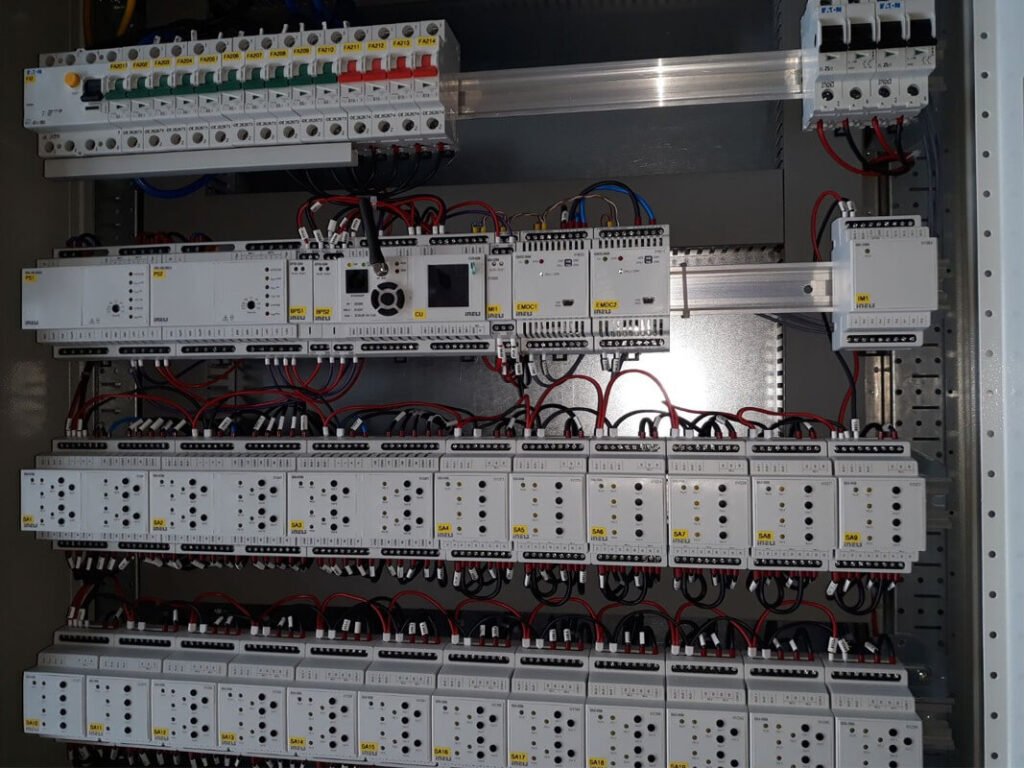
Sustained energy savings and system reliability require proper building management system maintenance strategy implementation during the facility’s lifecycle. Over time, regular cleaning and verification of system sensors, as well as scheduled software maintenance, can aid optimal system performance.
Continuous monitoring systems offer real-time alerts and diagnostics, enabling rapid response for failing or subpar components. Proactive maintenance triggered from system alerts ensures that small problems are fixed before they become major risks to energy savings or occupant comfort.
Occasional recommissioning offers performance verification and helps track system optimization drifts as, alongside building usage pattern shifts, new opportunities could arise to further improve system performance.
Cutting-edge lighting control technologies integrate sophisticated energy management systems and go beyond simple energy-saving adjustments. This includes building value enhancement, operational cost reductions, and illustrating responsible energy use and environmental conservation while creating a positive indoor environment for building occupants.
IET offers over 75 years of electrical engineering experience to implement state-of-the-art building management system lighting control solutions in East Africa. We utilize modern foreign technologies alongside our knowledge of local conditions to develop and implement lighting control systems with unparalleled operational efficiency and energy savings. Reach out to IET today and learn more about our advanced building management system and how IET intelligent solutions can improve energy efficiency and decrease operational costs in your facility.