
Hiring an Electrician? Here’s What You Need to Know

The contractor of choice for your facility’s electrical work will determine investment in safety, efficiency, and long-term operational success. Selecting an electrical contractor will be critical for project outcome and operational reliability for your facility, whether you’re planning an extensive industrial installation, upgrading aging commercial infrastructure, or incorporating sophisticated automation systems. The scope of modern electrical works includes much more than just wiring and basic installations. Power distribution, motor control, building automation, and energy management systems all of which are integrated in modern commercial and industrial facilities need advanced electrical systems. Such a high degree of specialization calls for professionals with a solid and versatile technical expertise and field experience in advanced electrical systems. Electrical work has a significant potential for serious implications. Safety risks, equipment damage, expensive downtime, and compliance with regulatory requirements are all risks of poor workmanship. The right electrical professional, on the other hand, will ensure the systems work safely, efficiently, and reliably for the long term. Knowing what to look for and what to ask becomes paramount for every informed hiring decision. Understanding Electrical Licensing and Qualifications An electrical professional’s credentials are assessed based on their professional licensing. An electrician near me, for example, must go through an educational program, an apprenticeship, and pass multiple exams to receive a license. Moreover, different regions have different criteria for issuing licenses, and knowing these differences makes sure that the practitioners you engage are the right ones for the job. In addition to the basic license, a number of branches require unique licenses as well. This is the case for industrial electricians who are often qualified to work in motor control, power systems analysis, and industrial safety procedures. Commercial specialists may have building management systems energy efficiency training, or a brand-specific certificate that indicates they are trained on particular devices and systems. Through the courses and training that are scheduled, licensed professionals are ensured that they will be aware of new codes, devices, and best methods in their field. Electricians who work on their professional development, for instance, through courses, training sessions, or certification renewals by the industry, display a desire to maintain and improve industry standards. Professional Organizations and Industry Affiliations Being a member of an electrical professional body shows that you have work done in the field and you have furthered your education. Organizations such as IEEE, NECA, and other regional electrical contractors help their members gain professional competence by offering materials and various professional training. Certifications from equipment manufacturers look at the qualifications an individual holds from an employer’s standpoint. Certifications from companies such as Schneider Electric, Siemens, and ABB, or other large vendors, showcase unique expertise relevant to the products and systems which are within the scope of the project. Evaluating Technical Expertise and Experience These credentials do not cover the basic electrical concepts, but rather the specialized knowledge tailored to your project needs. Industrial plants need available staff who possess knowledge of intricate systems such as: motor control, advanced power quality, and industrial safety. Commercial offices often demand specialized knowledge in building systems such as: the integration of automation controls, energy systems, and other cooperating building trades. An individual’s past experience with similar jobs serves as the best benchmark for assessing an electrician’s ability to meet your needs. Request thorough descriptions of similar jobs, along with the project scope, problems encountered, and the solutions provided. Recommendations from similar jobs done can lend additional insight into technical skills and ability to manage projects. Knowledge of power systems becomes more critical for facilities equipped with advanced electrical systems. Knowledge of load calculations, fault analysis, power factor correction, and harmonic mitigation transforms a simple installation into an advanced electrical system which performs and operates with optimized efficiency. Specialization in Advanced Technologies Modern electrical installations are integrating more and more advanced technologies which require specialized knowledge and experience. For example, variable frequency drives (VFDs) and programmable logic controllers (PLCs) as well as building management systems, are technologies that require specialized knowledge. As businesses and manufacturers try to take control to optimize their processes, automation system integration becomes a necessity. While electrical contractors who specialize in industrial automation have ample experience in integration, they also can help in the design phase to ensure proper integration between electrical and control system components. Project Planning and Management Capabilities The scope of electrical projects entails a combination of and significant technical knowledge and experience with good planning to ensure the project runs smoothly in the intended time. Proper estimation of project scope, detailed planning, defining milestones, and a comprehensive communications plan need to be well designed ahead of time. Communication has become central and crucial to the success of the project. For complex installations, multiple contractors and stakeholders need to be involved and, more often than not, simultaneously. Clear and timely reporting, explaining with updates and inter-discipline coordination, avoiding miscommunication, and ensuring timelines are met directly contributes to a project’s success. Quality electrical specialists systematically document every aspect of a project, from detailed system drawings to specification sheets, test results, and comprehensive maintenance recommendations. These documents enable long-term, reliable system troubleshooting and aid in effortless future maintenance. Such practices reflect pertinent industry and professional benchmarks. Autumn Coordination with Other Professionals To aid in the completion of their scope of work, many electrical projects necessitate collaboration with architects, engineers, general contractors, and other specialists. Professionals with strong collaboration and communication skills expedite the integration of the electrical work, which facilitates seamless incorporation into the larger project. Familiarity with the construction schedule, building codes, and other legal stipulations allow electrical professionals to foresee issues and take measures to mitigate possible delays and other complications. These factors also enhance the overall success of the project and improve the client’s experience. Safety Standards and Risk Management Working with electricity entails safety hazards that necessitate a comprehensive safety management plan and strict adherence to established safety regulations. Electricians are obligated to possess a strong command of electrical safety codes concerning personal protective equipment, workplace hazards,
How Active Power Factor Correction Transforms National Infrastructure Efficiency
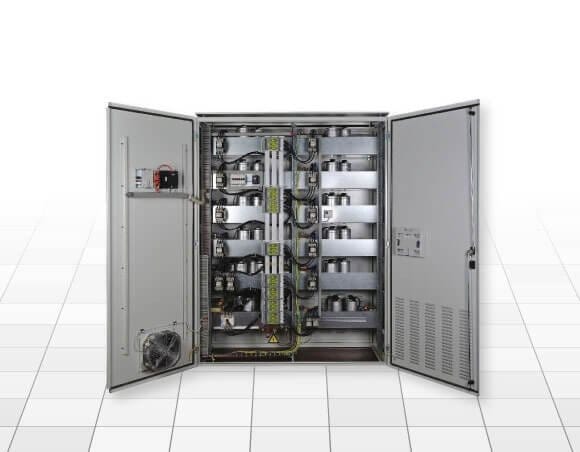
In any economy, the national electrical grid is perhaps the most critical infrastructure as it serves as the backbone of the economy. For any developing economy that is looking towards industrialization, as well as having a growing urban population, the need for reliable and efficient electricity becomes extremely important. At the core of this issue, there is one principle of active power factor correction in electrical engineering that plays a critical role in determining the success and failure of national power systems. Active power factor correction for national infrastructure goes beyond improving efficiency and enhances strategic power management. Removing or increasing power management can literally make or break a country’s industrial development aspirations. If implemented effectively, these systems can improve existing infrastructure. They can reduce generation, improve voltage stability, and level electrical transmission improvements. Electrical grids are facing new and modern issues. Industrial power needs have become more advanced. Sophisticated electronic equipment adds new demands. Lowering these demands is not a solution, as traditional, more passive, correction techniques do not work with the fast-paced power systems of today. This is where active correction techniques can truly transform the national infrastructure development. Understanding the Critical Role in Grid Stability The Economic Impact of Poor Power Factor Directly associating the diminished economic productivity of any nation with the malfunctioning energy systems portrays the Economic Impact of Poor Power Factor efficiently. The energy systems’ efficiency directly relates to economic productivity. The current grid connection infrastructures integrated with modern manufacturing have transformed societies. It is highly emphasized in research that poor energy utilization and efficiency have negative effects on the economy and productivity of the energy systems of any nation, region, or the world as a system. By studying the economy of any specific country while focusing on the utilization of energy in the manufacturing section, we can understand the broad picture. It allows understanding of every specific country in general while designing a model for a specific country and empowers intelligent guesses for every country to a greater or lesser extent. It is claimed that if energy is used intensively and efficiently, the economy of any country can be boosted. The efficiency of using the energy systems portrays specific goals through modernization, which, if utilized, could directly or indirectly help the energy systems be of greater value to the isolated parts of the world. It empowers intelligent guesses for every country to a greater or lesser extent, while suggesting the energy be used efficiently while modernizing. If utilized, the goals could be achieved through greater modernization of the world or the whole system. Grid Stability and Voltage Regulation Active power factor correction systems are advanced technologies which provide enhanced grid dynamical performance and voltage stability. In contrast with passive systems which provide fixed compensation, active systems are adaptive and respond to changes in real time, which is highly important during rapidly changing load conditions or the integration of renewables into the grid. Voltage stability issues are critical for the performance of electrical networks, as the consequences of instability can disrupt operations in hospitals and manufacturing centers. Active correction systems ensure that voltage is maintained within acceptable limits. This prevents equipment damage and ensures that critical infrastructure components can operate seamlessly. Active correction systems also provide the ability to respond to changes in critical operating conditions. It also provides the ability to respond to critical natural disasters, equipment faults, or sudden load changes which can cause a destabilization of electrical systems. Active correction systems are capable of providing the kind of rapid response active power factor correction systems that are needed during these difficult times to maintain power quality. Advanced Technologies in Power Factor Correction Equipment Static VAR Compensators and Their Applications In addition to their modern day uses, static VAR compensators have proven to be extremely useful as modern day power solder equipment. The static VAR compensators, true to their name, are the true managers behind the compensating reactive power meters in massive power devices. The VAR compensators help achieve control under certain thyristor confinements by combining the thyristor controlled reactors and the fixed capacitors which aid in a very fine and smooth control under certain reactive power control conditions. Due to the reason that these systems are very digitally advanced, the control over the reactive power control can be precise as well. This proves to be specifically useful and beneficial for the modern day electric grid since the load characteristics are very different and could be highly extreme in different times of the day, seasons or even areas. For example, the different areas which are industrial, residential and commercial have very distinct reactive power profiles that are on the account of the working conditions, and the time of use. With the help of micro processors, advanced control algorithms are being created and integrated. In addition to precision reactive power optimization, micro processors also help achieve precision in power quality under dynamically changing loads. The advanced control algorithms help in the precision micro processors aid in the fast response times that are very important. The addition of the micro processors also helps with the advanced protection plans which help during a case of system failure. Harmonic Mitigation Capabilities Today’s power factor correction devices have integrated filters for simultaneous removal of several power quality problems. Harmonics created by Modern electronic equipment interfere with communication lines, malfunctioning of electrical devices, and excessive heating of electrical parts. Active correction systems are possible for both reactive power and harmonic correction. The flexibility of dealing with multiple power quality problems with one system makes it cheaper and easier to maintain. This system becomes especially helpful in developing countries where lack of skilled personnel and spare parts can be a problem. Integrated systems reduce the amount of specialized devices that need constant up-keep and servicing. Filtering capacitors for high frequency oscillation also shields highly sensitive electronic devices from power quality variables. The power quality of clean electrical power becomes very important with the increasing use of advanced control
How a Capacitor Bank for Power Factor Correction Transforms Manufacturing Operations
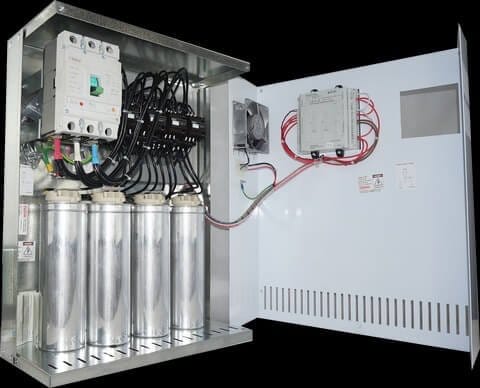
In manufacturing facilities, the struggle against unplanned downtimes and inflationary energy expenditures is constant. Every moment an assembly line is idle, revenue is lost. Manufacturing facilities are often burdened with inefficient energy systems that spend money utilizing power systems that do not optimize value. Implementing a capacitor bank for power factor correction can help solve these issues. In modern production facilities, the use of numerous electromechanical systems containing inductive loads in the shape of motors, transformers, and welding tools is commonplace. These systems come with several inductive loads and reactive power demands, which burden the electrical system and lower the productivity of the entire system. The need for power factor correction becomes inevitable in such scenarios, and when these solutions are not deployed, the manufacturing systems suffer voltage fluctuation issues, equipment damage, and unnecessarily high bills. Facilities that adopt strategy-specific correction power factors are often rewarded with operational reliability. Energy use decreases, and equipment’s operational life increases alongside unanticipated breakdowns when capacitor systems are properly calibrated. In today’s manufacturing environment, these strategies optimally position facilities and provide them with an edge in making competitive business decisions. Understanding Power Factor Impact on Manufacturing Operations The Hidden Cost of Poor Power Factor Poor power factor in manufacturing operations creates substantial operational difficulties within the entire facility. Operating electrical systems with power factor below 1 require more current than usually required for that given production equipment. This unnecessarily high current consumption strains switchgear, transformers, and distribution cables, leading to accelerated equipment deterioration, heightened maintenance demands, and increased wear and tear. Analyzing the cost of operations from the perspective of the utility bills provides insight into the financial consequences. Most industrial electricity tariffs include demand charges or power factor penalties that, when taken into account, have the potential of amplifying the monthly energy expenses. Manufacturing facilities suffering from poor power factor face penalties of anywhere between 10% to 30% of their electricity bill. These incremental expenses have a direct impact on production cost, further aggravating the profit margins. In addition, electrical systems that are stressed operate under increased pressure and have a higher likelihood of failing during peak production times. When the demand for reactive power exceeds the system’s capabilities, the overheating of equipment, voltage drops, and trips of protective devices become all too common. The immediate consequences are production downtimes, however, the system is susceptible to a domino effect that is capable of impacting production schedules and customer relations for the foreseeable future.. Voltage Stability and Equipment Performance Power factor correction capacitors (PFC) are vital within voltage stability management of manufacturing facilities and their systems since they help mitigate poor voltage stabilization during load changes and startup sequences of equipment. They also help to reduce voltage-sensitive equipment from damaging or shutting down from voltage fluctuation. Motor-driven systems require stable voltage and are sensitive to overheating. Uncontrolled voltage variations within motor-driven systems result in excessive current, overheating, and accelerated wear to vital machinery parts. For example, manufacturing processes that revolve around motor-powered mixers, conveyor systems, or machining processes require stable voltage. Without it, product quality and production stability will be inconsistent. As discussed above, the above factors are defined within the voltage stability and the lifespan of the equipment in the context of manufacturing facilities. Replacing failed equipment tends to take long and require precise timing to avoid operational hours loss. For instance, the replacement or repair of microwave-powered motor systems of the production lines can take hours or, in some cases, days. Strategic Implementation of Capacitor Bank for Power Factor Correction System Design Considerations for Manufacturing Applications Balanced capacitor banks are important for improving the power factor of manufacturing systems and ensuring the efficiency of energy systems. A comprehensive study of load behavior and operating schedules is important for manufacturing systems considering the implementation of capacitor banks. Manufacturing systems are characterized by intermittent operation of equipment and high variability in power demand. Hence, the type of capacitor bank used should provide base load correction and automatic adjustment for variable load correction. In the capacitor banks, both steady state and transient operating conditions must be accounted for. Equipment in the manufacturing systems is characterized by high starting currents that lead to temporary lower power factor. This condition can activate protective devices if not controlled. Advanced control systems can control power factor correction by optimally sequencing capacitor switching to accommodate all operating modes. Fulfilling the protective requirements of the capacitor banks is important to ensure reliability of operations in harsh environmental conditions. In manufacturing systems, space limitations coupled with environmental factors can impact overall system performance. Hence, the capacitor banks should be accessible for routine checks while also protected from dust and moisture, operating temperature extremes, and lacking ventilation. A well-designed protective system can mitigate harsh environmental conditions while ensuring access to needed maintenance. Integration with Existing Electrical Infrastructure The electrical distribution systems of contemporary manufacturing facilities are multilayered and shaped over several decades. The implementation of new power factor correction capacitor systems requires an examination of the infrastructure in order to determine how it can be integrated with the infrastructure and what corrective steps are needed to enhance its efficiency. Capacitor systems present challenges in facilities with heavy electronic loads. These systems are capable of drawing significant reactive power and thus harmonic analysis becomes imperative. Coordinating the protection systems within the critical system boundaries is also very important for system design. The capacitor switching can introduce transient conditions that propagate throughout the electrical system and affect protective relay settings. The protective systems must be maintained as functional and responsive to the automated dynamics of power factor correction systems while providing effective system protection. The interfaces also allow the incorporation of the existing building management and supervisory control systems. Facility managers can control power factor conditions, energy, and system performance through the centralized control systems. The automated control systems can also track the set parameters in real-time providing the managers with the ability to anticipate problems that can lead to equipment failure or production
Power Factor Correction Device Selection for Industrial Operations
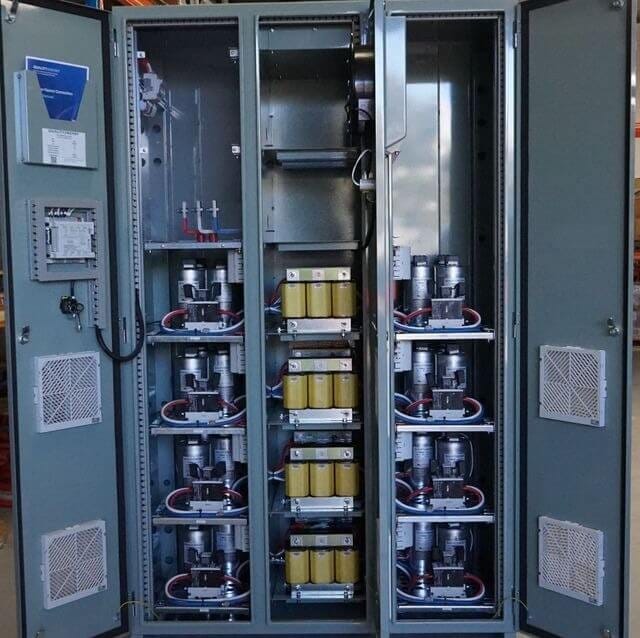
Manufacturing industries across the world have begun to appreciate the need for power factor optimization within their electrical systems. Choosing the appropriate power factor correction device can eliminate operational inefficiencies. It is essential for industries to understand the nuances of power factor correction in the wake of rising electricity costs, power availability, and stringent regulations from power supply authorities which, in turn, aids in enabling a competitive edge. Power factor is the ratio of active power to reactive power in an electrical system, and poor power factor can affect finances of a business. If inductive loads such as motors, transformers, and fluorescent lamps dominate a facility’s electricity profile, the systems as a whole become progressively inefficient. This inefficiency drives a business’s energy costs through the roof, resulting in utility penalties and decreased equipment lifespan. In order to achieve accurate power factor correction, the first step is to have a facility’s electrical systems and operational requirements thoroughly analyzed and understood. The selection of these parameters within modern industrial systems is the is ever increasing as modern industrial plants face complex challenges. Understanding Power Factor Fundamentals in Industrial Settings Power factor correction deals with the difference in voltage and current in AC electrical systems. If this difference becomes larger, more current will be needed to provide useful power to the equipment. The extra current that is flowing will pass through the electrical system, doing no useful work, causing more losses, and lowering system capacity. Industries and Businesses usually have power factor problems because of the inductive loads as motors and transformers. The electric motors that integrate in most industrial processes draw lagging current, which causes poor power factor. Transformers, welding machines, and arc furnaces are other inductive loads that provide a lagging power factor. The poor power factor will have a financial impact in other aspects besides energy consumption. Utilities may have a power factor penalty, where they charge extra if a facility is below a specific limit, which is usually set between 0.85 to 0.95. The extra charge can greatly increase the monthly power bill making the equipment needed for correction a good purchase instead of an optional upgrade. Advanced power quality monitors and analyzers allow engineers to see power factor behaviors in real time for different operational conditions. With this insight, engineers are empowered to make well-informed decisions regarding correction strategies and equipment sizing to optimize performance for varying loads. Types of Power Factor Correction Equipment Capacitor Banks: The Traditional Foundation Fixed capacitor banks in industrial setup still remain to be the most adopted solution for power factor correction. These systems work well in facilities where the load remains relatively stable over time as they offer a specific amount of reactive power compensation. While fixed capacitor installations are reliable, robust, and low-maintenance, they are unable to adapt to differing operational conditions. There are also automatic capacitor banks that add switches which activate capacitor steps in response to a specific demand for reactive power. These systems ensure reliable and optimal power factor correction in various operational scenarios as they respond and adapt to different load changes. The more advanced automatic systems also incorporate microprocessors which make automatic switching decisions based on real time data to maintain the set power factor level. Your electrical system’s capacitor banks need careful planning in regards to the harmonics present. These harmonics can lead to resonance harmonics, which in turn can lead to damages in the capacitors and affect the quality of the power. Today, many systems come with built-in filters that can reduce harmonics, balance power factors, and greatly improve resonance power quality. Synchronous Condensers: Dynamic Performance Solutions For large scale industrial plants that have varying demands for reactive power, synchronous condensers provide the best performance. These rotating machines can provide both leading and lagging reactive power, offering exceptional flexibility in power factor management. Synchronous condensers differ from static capacitors in that they have the capability of absorbing reactive power in less-than-optimal load conditions, thus preventing power factor overcorrection. Synchronous condensers are best for plants that have large motor starting loads or those with rapidly varying loads. These machines can provide slow and steady adjustments to reactive power, which avoids the capacitive bank-switching transients. But as with all rotating machines, the selection process must balance the higher initial and maintenance costs. With the advancement of technology, modern rotating machines are now equipped with sophisticated control systems that allow them to autonomously connect and disconnect with the rest of the plant. Real-time data of the electrical parameters of the plant such as high and low voltage systems enhances the control systems to adjust the reactive power outputs, thus efficiently managing power. Static VAR Compensators: Advanced Control Technology Static VAR Compensators are the most sophisticated Power Factor Correction Devices for diverse and critical Industrial applications. They provide a instantaneous response to changing conditions due to the effective combination of inductive and capacitive reactive power sources with modern control electronics. The reactive power control in SVCs is implemented with thyristor-controlled reactors (TCRs) and thyristor-switched capacitors (TSCs). Due to the speed with which SVC systems respond to changes, they are best suited for use in industries which use arc furnaces, rolling mills, and large motor drives. These systems are capable of load change response in milliseconds while ensuring stable power factors and voltages even during extreme disturbances. Moreover, advanced control features of the system allow optimization of power quality parameters in addition to simple power factor correction. The integration of SVC systems poses challenges in protection coordination and system stability. The fast response can interact with the existing protection systems, which requires detailed studies for dependable operation. Still, the precision provided in critical industrial applications due to the controlled reactive power compensates for the added complexity. Critical Selection Factors for Industrial Applications Load Characteristics and Operational Patterns Your facility’s load profile determines how effective correction units or systems will be and will serve as the basis for selection. The continuous monitoring of power factor correction over a period
Power Factor Correction Schematic Integration for Smart Building Energy Management

The modern building management systems now go far beyond just HVAC controls and include modern electrical systems optimization techniques that directly relate to efficiency and cost management. The integration of power factor correction schematic design within these systems marks a new level of building intelligence. The modern commercial and industrial buildings require automated building systems to work in tandem with power quality management systems in real time, opening doors to optimize energy use like never before. The integration of power factor correction with building automation systems now allows real-time management of reactive power based on instantaneous electrical loads within the facility, allowing power factor to be smarter and more dynamic than ever. These systems change traditional static correction methods into intelligent, self-adjusting systems which change the power factor correction based on real-life data instead of theory. As building owners and facility managers become more sophisticated, they come to the realization that effective power factor correction involves more than just standalone correction equipment. The advanced power factor correction circuit designs can now be integrated with the existing building management systems, thus offering centralized control and monitoring of enhanced operational visibility, and system performance that make real-time power factor management smarter and self-optimizing. Fundamentals of Building-Integrated Power Factor Management To effectively incorporate power factor correction within a building management system, it is important to note distinct features and shifts in dynamics of modern commercial electrical loads. Unlike industrial plants that work with fixed load patterns, commercial buildings vary significantly in power factor throughout a day’s operations. HVAC systems, lighting loads as well as any electronics create a reactive power profile that is complex to say the least. Stand-alone correction systems are based solely on electrical measurements within a building, and are independent of building management platforms. This results in non-optimal performance during transitional load periods. Integrated systems that utilize building management system data to predict load shifts are capable of preemptively adjusting corrective strategies to optimize building performance. Unique and distinct requirements, such as communication protocols, control interfaces, and data exchange capabilities must work in conjunction with the existing automation structure to guarantee seamless integration and holistic system access. This makes selection and integration of power factor correction devices more elaborate when incorporating building management systems. Advanced optimization algorithms of reactive power and power factors in general require management of multifactor computation such as electrical measurements, weather conditions, occupancy patterns, and scheduled operations to work alongside in real time with system data streams. Modern platforms for building management systems allow for effective systems integration. Advanced Schematic Design for Intelligent Buildings Centralized Control Architecture The designing of effective power factor correction schemes for integration with building management systems demands attention to control architecture structure as well as the communication pathways. Centralized control systems tend to designate the building management system as the sole control decision hub and the correction equipment as intelligent devices functioning exclusively to respond to commands to optimize the system as a whole. This architecture allows for advanced interactions between power factor correction and other systems of the building. For instance, the building management system is capable of predicting the need for correction during the cooling peak periods due to reactive power demand and adjusts the correction equipment proactively to sustain desired power factor levels. The system adjusts its correction strategy also during the periods of low occupancy to prevent overcorrection effectively sustaining the stable voltage conditions. The schematic design includes the building management system and correction equipment as requiring two-way communication. This pathway allows the building management system to receive real-time feedback for the performance of the correction system and the building management system to provide real-time feedback for power quality data. Advanced design schematics include systems of redundancy and failsafe controls which enable operation during communication outages or maintenance of the building management system. Such designs often incorporate local control systems which ensure basic correction features are operational and allow for seamless recombination to integral operation after communication restoration. Distributed Intelligence Networks Modern building management systems increasingly utilize distributed intelligence architectures that distribute decision-making capabilities throughout the facility infrastructure. This approach enables more responsive power factor correction by placing intelligent control nodes closer to electrical loads, reducing response times and improving system stability. Distributed power factor correction circuit designs incorporate local processing capabilities that can make immediate correction adjustments based on real-time electrical conditions. These local controllers communicate with the central building management system to provide system-wide visibility while maintaining autonomous operation capability during communication disruptions. The integration of distributed intelligence enables zone-based power factor management strategies that optimize correction for specific areas of the building based on local load characteristics and operational requirements. This approach is particularly valuable in mixed-use facilities where different areas have distinctly different electrical profiles and correction requirements. Network security becomes increasingly important as power factor correction systems become more integrated with building management infrastructure. Modern schematic designs incorporate cybersecurity measures that protect both power quality and building automation systems from potential security threats while maintaining operational functionality. Integration Protocols and Communication Standards Building Automation Protocol Compatibility The successful integration of power factor correction systems with building management platforms requires careful attention to communication protocol compatibility and data exchange standards. Modern building management systems typically utilize protocols such as BACnet, LonWorks, or Modbus for device communication, and correction systems must be compatible with these standards to enable seamless integration. BACnet compatibility enables power factor correction systems to appear as native building management system objects, providing standardized data points for monitoring and control. This integration allows facility managers to access power factor data through familiar building management interfaces while enabling advanced control strategies that coordinate correction with other building systems. The power factor correction equipment must support appropriate data models and communication services to provide meaningful information to building management systems. This includes not only real-time electrical measurements but also diagnostic information, alarm conditions, and configuration parameters that enable comprehensive system management. Protocol translation and gateway solutions provide integration pathways for legacy correction
Why a Building Management System for HVAC Is No Longer Optional

Industrial facilities everywhere are facing an uncomfortable truth: older HVAC systems are costly and their inefficiencies are multiplying by the day. While many plant supervisors pay attention to streamlining the production line, one of the most profound operational expense drainer often gets overlooked. With the right optimization, predictive maintenance becomes truly intelligent. A comprehensive building management system for HVAC operations solves the issue. For regulatory compliance, equipment lifespan, and for the device’s integrity, the modern industrial ecosystem needs precise control over the equipment’s environment. Comfort is merely one of the needs. Still, so many facilities continue to work with outdated control systems, wasting energy and air quality, while creating maintenance nightmares that are so easy to prevent. As an example, HVAC systems are responsible for 40 to 50 percent of energy consumption. Without intelligent HVAC automation, HVAC systems and equipment are redundantly cycled to unimaginably proactive but unsynchronized and inefficient levels. Utility expenses and equipment degradation are costly, but the most devastating outcome is a production halt. Facility managers have less and less appetite to incur these mounting, costly expenses. The Operational Reality of Modern Industrial HVAC Demands Over the last ten years, many facilities have adapted industrial processes to use new technology. However, they still rely on HVAC systems (Heating, Ventilation, and Air Conditioning systems) designed for simpler operations. Modern manufacturing environments frequently use temperature-sensitive electronic equipment and have strict air quality standards alongside temperature-controlled processes. These standards need precise and sophisticated environmental control. The complexity of modern HVAC systems is solved with building management systems that provide real-time monitoring and automated feedback to changing environmental conditions. These systems are constructed to manage complex environments without the need for manual interventions. They improve operation efficiency by taking into account a combination of numerous factors such as occupancy, weather conditions, production schedules, and equipment heat loads. Modern systems have the capability of integrating HVAC operations with other facility systems. When production equipment introduces unplanned heat loads, HVAC systems respond by automatically adjusting the cooling capacity. They also save energy by reducing the consumption of readily available energy during scheduled maintenance shutdowns while still protecting equipment from the environmental conditions. Advanced Automation HVAC controls provide facility managers with powerful energy management tools by enabling real-time monitoring of energy consumption and energy efficiency for the entire building. These tools are able to automatically calculate energy performance indicators for HVAC systems, enabling more precise monitoring when paired with real-time monitoring. Real-Time Monitoring and Control Capabilities Effective HVAC automation starts with a sensor network that gives ongoing feedback on the facility’s environmental conditions. These sensors track the temperatures and humidity levels in addition to measuring the air quality, the overall performance of the equipment, and the energy consumption in the facility. Centralized control systems receive this data and in turn, make thousands of micro adjustments using the temperature and humidity control, air flow, and energy usage settings of the HVAC systems to ensure optimal conditions while energy consumption is kept as low as possible. The system “learns” with experience, using operational patterns to identify for the system areas where greater efficiency could be achieved and automating the adjustments to the equipment to reduce workloads. The ability to monitor HVAC systems remotely allows facility managers to track operations from anywhere, receiving real-time notifications for equipment malfunctions, filter changes, or other system inefficiencies. By intervening before small problems escalate, the system averts increased spend and greater production halts. Energy Optimization Through Intelligent Automation Managing energy consumption is the primary focus for justifying the financial cost of systems. These systems utilize intelligent algorithms that analyze energy efficiency and the comfort of facility occupants to adjust the operations of HVAC equipment in real-time. Integrating variable frequency drives with building management systems enhances the control of fans, pumps, and compressors, enabling automation of precise operation cycles. Equipment no longer functions at fixed speeds during heating or cooling periods. Instead, it works at requirements during partial load conditions, which significantly reduces the energy consumed. In addition, building management systems have pre-set strategies to reduce energy consumption. This plays an important role in enabling facilities to participate in utility programs that offer financial compensation for energy reduction during peak load periods. These programs incentivize demand response capabilities. Preventive Maintenance Revolution Through Smart Systems Traditional HVAC maintenance relies heavily on scheduled service intervals based on manufacturer recommendations or historical experience. This approach often results in premature component replacement or unexpected equipment failures that disrupt operations when least convenient. Building management system maintenance transforms this reactive approach into predictive intelligence that monitors equipment health continuously. Vibration sensors detect bearing wear before catastrophic failure occurs. Current monitoring identifies motor inefficiencies that indicate impending problems. Filter pressure differentials trigger replacement alerts based on actual conditions rather than arbitrary time intervals. The financial impact extends beyond maintenance cost reduction. Predictive maintenance prevents production disruptions caused by unexpected HVAC failures, particularly critical in processes requiring precise environmental control. Equipment operates more efficiently when maintained based on actual condition rather than arbitrary schedules, extending useful life and reducing replacement costs. Data-Driven Maintenance Scheduling Advanced building management systems collect operational data that reveals equipment performance trends over time. This historical analysis enables maintenance teams to identify patterns that predict component failures, optimize service intervals, and stock appropriate spare parts based on actual usage patterns. Integration with computerized maintenance management systems streamlines work order generation, parts ordering, and technician scheduling. When the system detects a developing problem, it automatically generates appropriate maintenance requests with detailed diagnostic information that helps technicians prepare for efficient repairs. Performance benchmarking capabilities compare current equipment operation against historical baselines, identifying gradual degradation that might otherwise go unnoticed until complete failure occurs. This early warning system enables proactive intervention that prevents costly emergency repairs and production disruptions. Compliance and Indoor Air Quality Management Modern industrial facilities face increasingly stringent regulations regarding indoor air quality, employee safety, and environmental impact. Manual monitoring and control systems struggle to maintain consistent compliance with these evolving requirements, creating legal
Maximizing ROI Through Strategic Building Management System Software Implementation

Modern facilities are under pressure to improve efficiency while minimizing operational costs and environmental impact. The integration of IoT technologies has turned data analysis and automation into powerful facility management tools. As such, building management system software is vital to operational excellence. Today’s facility managers are discontent with maintenance and monitoring systems that are manual and reactive. Strategies like “set and forget” are now obsolete. Today’s facility managers need real-time visibility, prediction, and automation in response to building performance optimized systems. Cutting-edge BMS platforms are now at the center of facility optimization strategies for building performance. The transformation from traditional building controls to advanced management platforms is both digital and conceptual regarding how we design and operate modern facilities. Organizations that adopt this dual evolution unlock previously untapped operational cost savings, increased occupant comfort, and metrics of improved sustainability. Understanding the Core Components of Modern Building Management Systems Today’s building management system software features sophisticated HVAC automation and intelligent systems that interface and integrate with automation capabilities. These building management systems now incorporate different building subsystems into a single control system for centralized monitoring, optimization, and intelligent automation of facility operations. An organization’s operations and systems can be viewed as a hierarchy of collaborative segments, with each serving as a managerial and operational layer. Each built-in framework will have a data validation mechanism called the Data Acquisition (DAC) framework. This layer validates data directly with field devices like sensors and controllers within the organization. This layer enables the operation of communication protocols and network infrastructure that allows data sharing and integration of systems, components, and devices of different complexity and nature. The Collection System (CS) lies over the DAC layer. This works as the data aggregation framework that works with data collection, evaluation, and refinement. This layer will carry out the basic functions for data collection and initial retrieval. It can be said that the functions of monitoring and data processing fully refers to the modern systems for monitoring and data processing. Intelligent BMS systems enable management and staff to be geographically distributed by granting mobile, tablet, and PC access to the system, thus opening the possibility of remote management and operation of the system. Availability of restricted functions and operations enables multiple users to work in the system concurrently based on the preset access rights. This layer enables design of charts, graphs, and data retrieval that can be presented as diagrams and custom report formats. Additional data centers and satellite offices will now be possible to be connected to the system. This enables the communication with the external infrastructure such as the enterprise resource planning, energy management systems, or some external software. This allows the governing and managing of the systems, and devices on a higher level given that global systematic governing will be possible. Strategic Advantages of Integrated Building Management System Software Implementing an integrated building management system has measurable benefits on multiple organizational operational dimensions. Improved energy management is often the most immediate and quantifiable advantage, as 30% reductions in energy consumption are achieved through optimized systems driven by advanced scheduling, demand response, and equipment optimization routines. Predictive and condition-based maintenance provides compelling benefits as well. The integrated systems monitor equipment performance in real-time, allowing them to identify failures proactively, reducing the need for emergency repairs and extending the equipment lifecycle. This 20-25% reduction in maintenance costs while increasing system reliability is achieved through proactive, prescriptive maintenance strategies. Changes to comfort and productivity, along with other parameters, often add the most long-term value. The correlation between optimal environmental parameters and performance is well-documented, as controlled environments reduce absenteeism while increasing productivity and occupant satisfaction. Optimization in Space Utilization has recently emerged as an important advantage, especially in the commercial real estate markets where costs associated with space represent a large operational expenditure. Advanced Building Management Systems and their detailed occupancy analytics enable organizations to streamline their real estate portfolio while maintaining service quality. Streamlined compliance collection processes ensure that organizations stay within the bounds of established regulations while providing accurate data that may be required during audits and certification processes. Streamlined processes also lessen the administrative workload. Technical Considerations for Building Management System Installation Successful building management system installation requires careful attention to network architecture, device integration, and scalability considerations. The underlying communication infrastructure must support reliable data transmission between field devices and the central management platform while accommodating future expansion requirements. Protocol selection significantly impacts system performance and integration capabilities. Modern installations typically support multiple communication protocols simultaneously, enabling integration of legacy systems while accommodating newer devices with advanced capabilities. This flexibility ensures long-term system viability and reduces replacement costs. Cybersecurity considerations have become paramount in BMS design, requiring robust security measures at multiple system levels. Network segmentation, encryption protocols, and access controls protect against cyber threats while maintaining system functionality. Regular security assessments and updates ensure ongoing protection against evolving threats. Redundancy and failsafe mechanisms ensure continuous operation even during component failures or network disruptions. Critical systems require backup power supplies, redundant communication paths, and automatic failover capabilities that maintain essential functions during emergencies. Commissioning and testing protocols validate system performance and ensure proper integration between components. Comprehensive testing should evaluate both individual device functionality and system-wide performance under various operating conditions. This validation process identifies potential issues before full deployment and establishes baseline performance metrics. Advanced Features of Intelligent Building Management Systems Intelligent building management system capabilities extend far beyond traditional control functions, incorporating artificial intelligence, machine learning, and advanced analytics to optimize building performance continuously. These systems learn from operational patterns, adapt to changing conditions, and implement optimization strategies that evolve over time. Predictive analytics leverage historical data and machine learning algorithms to forecast equipment failures, energy demand patterns, and maintenance requirements. This capability enables proactive decision-making that prevents problems before they impact operations while optimizing resource allocation. Automated demand response capabilities enable buildings to participate in utility demand response programs, reducing energy costs during peak demand periods while supporting grid stability.
8 Core Advantages of Building Management System in Commercial Operations

Today’s modern businesses struggle with rising energy costs, operational efficiency, and achieving compliance within regulations. The advantages of building management system include improving facility operation, monitoring, and optimizing systems. With today’s dynamic market, facility managers, engineers, and other key decision makers understand that having a competitive advantage requires a proper understanding of building management systems(BMS) automation technology. BMS systems integrate multiple building technologies into a single intelligent system. HVAC, lighting, security, fire, and energy management are all consolidated into a single system that can adapt and change to real time conditions. Rather than simple programmable controllers, today’s technology utilizes IoT sensors, machine learning algorithms, and cloud-based analytics. Automation technology offers more than just streamlined operations. Strategic automation improves energy efficiency, building security, streamlines HVAC and lighting operations, boosts employee productivity while enhancing overall comfort and automates energy consumption monitoring. Today’s commercial and industrial businesses thrive on automation technology. In the next section, we will delve into the eight primary advantages which reinforce building automation technology. 1. Dramatic Energy Cost Reduction Through Intelligent Optimization When it comes to commercial buildings, energy consumption greatly overshadows all other operational expenditures, taking up 30 to 40 % of the overall operational spending. The challenge of such gigantic spending gets solved through energy management systems equipped with sophisticated building algorithms driven by deep learning to constantly assess huge data and modify system logics. The technology achieves energy savings through multiple mechanisms. The energy-real consumption systems constantly monitor for errors, and the algorithms balance systems based on a number of predictive data such as weather, historical data, or even attendance records. More advanced systems estimate a prediction lower than the spending within the first year. The comprehensive schedule eliminates waste during the hours when no one is present within the building. The system is capable of automatically reducing the temperature to a prescribed degree, lowering the amounts of used light, and turning off all gear which is not mandatory when spaces are not being used. Automated systems guarantee energy management, in contrast to the manual approaches which proved to be not result-oriented. The systems and the time schedule lead to a balance of the energy used. Therefore, all the non-mandatory functions which generate energy waste during the off peak hours are moved to the peak hours. The coordination with the equipment usage leads to taking the utility rates and lowering the demand charge. 2. Enhanced HVAC Performance and System Longevity The integration of HVAC systems into building management systems (BMS) is one of the greatest benefits of building automation. Comprehensive HVAC systems intelligently manage operations to optimize the heating, ventilation, and air conditioning (HVAC) systems. These systems optimize performance, improve air management, and smartly reduce the wear and tear on the equipment, thereby increasing its life. The system constantly checks the temperature and humidity to enhance occupant convenience and comfort, thereby providing a conducive environment while minimizing energy waste. HVAC systems equipped with temperature-controlled, variable speed, and modulating controls ensure maximum energy efficiency and precision for all the loads. These systems provide energy efficiency and precision for all the loads. Scheduling maintenance based on equipping runtime hours and equipment performance metrics helps proactively address problems, increasing the life of the systems. These systems constantly monitor the performance of the HVAC systems, check for blocked filters, monitor system vibrations, and analyze performance trends to predict maintenance and servicing needs ahead of time. Using zone-based control strategies, designated parts of the buildings such as offices, common areas, and bathrooms can be controlled based on individual objectives, thereby increasing efficiency. These areas can be controlled for temperature and ventilation settings specific to optimal use, occupancy, and to ensure comfort for the intended users. 3. Intelligent Lighting Control That Adapts to Real Needs Building management system lighting control capabilities deliver both energy savings and improved occupant experience through sophisticated automation strategies. Modern systems integrate daylight harvesting, occupancy sensing, and task-specific lighting requirements into seamless operation. Occupancy-based lighting control ensures lights operate only when spaces are in use. Advanced sensors detect both presence and activity levels, allowing the system to dim or switch off lights in unoccupied areas while maintaining appropriate lighting for occupied spaces. Daylight harvesting automatically adjusts artificial lighting based on available natural light. Photosensors monitor ambient light levels and reduce electric lighting output when sufficient daylight is available, maintaining consistent illumination levels while minimizing energy consumption. Circadian lighting systems adjust color temperature and intensity throughout the day to support occupant wellbeing and productivity. These systems can improve sleep patterns, reduce eye strain, and enhance cognitive performance by aligning artificial lighting with natural biological rhythms. Scene control allows different lighting configurations for various activities. Meeting rooms can switch between presentation mode, collaboration settings, and videoconferencing configurations automatically based on calendar integration or manual selection. 4. Comprehensive Security Integration and Access Control Building security becomes more sophisticated and effective when integrated with comprehensive management systems. These platforms combine access control, surveillance, and alarm systems into unified security management that responds intelligently to various scenarios. Access control integration allows different security levels based on time, location, and individual credentials. Employees can have access to their designated areas during business hours while contractors might have limited access to specific zones during predetermined periods. Video surveillance integration enables automatic recording triggered by security events or unusual system conditions. Cameras can activate when doors are accessed after hours, when environmental alarms trigger, or when equipment operates outside normal parameters. Emergency response coordination improves safety through automated responses to fire alarms, security breaches, or system failures. The system can unlock emergency exits, activate emergency lighting, shut down HVAC systems to prevent smoke circulation, and guide occupants to safety. Integration with facility management systems provides comprehensive audit trails for compliance and investigation purposes. All access events, system changes, and security incidents are logged with timestamps and user identification. 5. Proactive Maintenance Through Advanced Monitoring Predictive maintenance capabilities represent a significant evolution from reactive repair strategies. Building management systems continuously monitor equipment performance, identifying potential problems
Building Management System Lighting Control for Energy Efficiency

The rising costs and heightened awareness of environmental issues have made building management system lighting control systems a key technology for modern commercial and industrial facilities. With lighting consuming about 20-40% of a building’s energy, using sophisticated control systems gives businesses the greatest opportunity to incur less operational costs, while improving employee comfort and productivity. Today’s commercial buildings demand more than basic on–off switches. They require intelligent systems that can adapt to occupancy, daylight availability, and operational requirements. This transformation has tremendous impacts on energy management and lighting design, which in turn, can help businesses save operational costs and improve the building’s environmental performance. This transformation has tremendous impacts on energy management and lighting design, which in turn, can help businesses save operational costs and improve the building’s environmental performance. The Foundation of Intelligent Lighting Control Systems Today’s building management system lighting control systems work on the principle of dynamic responsiveness. Unlike static lighting systems, modern solutions continually observe the environment and occupancy and adjust to optimize energy use without sacrificing ease of use or comfort. The primary elements include occupancy and photosensors, control programming, and communication networks working together. Occupancy sensors detect a human presence and automatically adjust lighting levels. Photosensors detect ambient light and can reduce artificial lighting when sufficient daylight is present.The advent of Digital Addressable Lighting Interface (DALI) protocols and wireless technologies has brought a new level of flexibility to systems. These protocols support control of individual fixtures, which allows lighting to be adjusted as per the requirements of a particular zone. This provides a fine-tuned level of control over energy management and can suit the varying needs of different spaces in the same building. Efficiency can be further improved with zone-based control systems which partition a building into intuitive larger areas having uniform usage. These zones can be open offices, conference rooms, corridors, and even storage rooms, all of which have specific lighting needs that can be efficiently catered to through sophisticated automation. Advanced Control Strategies and Technologies Daylight Harvesting Integration Integrated building management systems have proven to be the most efficient when it comes to harnessing natural light through sophisticated daylight harvesting methods. These types of systems adjust the level of artificial light to be used based on the amount of natural light available. They monitor outer light levels and increase daylight as much as possible while maintaining a constant level of illumination and, most importantly, reducing energy usage. The system uses photosensors that gauge light levels both inside and outside the building. The advanced algorithms then calculate the required dimming level for each zone based on the photosensors’ real-time data. This method can reduce energy used for lighting by 30-50% in perimeter zones that have enough windows. Automatic seasonal adjustments guarantee year-round optimization. The system learns patterns of daylight availability during different seasons and modifies control algorithms automatically. Adaptive capabilities like these free the user from the burden of having to manually change the control programming in response to different environmental conditions. Occupancy-Based Control Systems Occupancy detection has become sophisticated and therefore to simplistic motion sensing. Current systems integrate dual-technology sensors that utilize passive infrared detection in conjunction with ultrasonic or microwave detection to mitigate false activations while assuring dependable occupancy detection. In spaces with a fluctuating number of people, time-delay settings help avoid excessive switching. Different zones require different strategies of timing- a private office may keep the lights on for 10 minutes after the last detected motion, while a storage room may turn off after 2 minutes. An advanced control strategy for large spaces is known as partial occupancy control. Instead of turning on lights for entire zones that are only partially occupied, the system has the ability to illuminate certain zones that have been occupied based on detected occupancy patterns. This strategy is ideal for warehouses, large retail spaces, and open offices. Energy Savings and Return on Investment Analysis A detailed analysis of the building lighting system and energy management systems reveals that their implementation is not only beneficial in terms of energy savings but also provides a financial return that goes beyond ordinary operational energy savings. A building management system (BMS) allows for a lighting control system (LCS) which integrates the lights with the rest of the building systems, yielding multi-dimensional value streams which altogether build the ROI (return of the investment). When it comes to direct savings, the figure usually falls between 20% to 60% due to the existing lighting system and its controllability sophistication. Typically, the facilities with the oldest lighting systems coupled with the least amount of existing controls tend to obtain the most savings. The figure directly depends on the occupancy patterns, daylight savings, and operational schedules. Another major benefit to cost saving includes the reduction of demand charge. Commercial electricity bills usually have a demand charge on peak power usage. Intelligent lighting control systems tend to lower peak demand by using load-shedding strategies during peak times. Maintenance cost reductions occur through several mechanisms: The typical payback period for comprehensive lighting control systems ranges from 2-5 years, with many installations achieving payback in under 3 years when energy rebates and incentives are factored into the analysis. Integration with Building Automation Systems Intelligent building management system integration creates synergies that amplify energy savings and operational efficiency. When lighting control systems communicate with HVAC, security, and fire safety systems, buildings can achieve coordinated responses that optimize overall building performance. Thermal load coordination represents a significant opportunity. Reducing lighting loads decreases cooling requirements during hot periods, creating compound energy savings. Advanced systems can predict cooling load changes based on planned lighting adjustments and pre-emptively modify HVAC operation accordingly. Security system integration enables sophisticated after-hours control strategies. When security systems indicate building occupancy outside normal hours, lighting systems can activate only in occupied areas while maintaining minimal lighting in unoccupied zones for security purposes. Fire safety integration ensures code compliance while maintaining energy efficiency. During emergency conditions, lighting control systems can override energy-saving settings to provide full illumination
How to Choose the Best Building Management Systems Companies for Your Project

Picking the right building management systems companies for implementing your new building management system (BMS) can mean the difference between a smooth functioning solution or years of operational headaches. The available options for building management system companies have dramatically increased, making the selection of a given partner riskier than before. This is especially true for modern commercial and industrial facilities, which come with their own added layers of complexity. Looking exclusively at the initial price of your building management system is shortsighted. The chosen company will have a critical bearing on all system operations including, but not limited to, performance, energy consumption, maintenance, and system operational dependability. Distinguishing between truly exceptional building management system companies from at best mediocre ones involves analyzing a mixture of the firm’s technical prowess and industry experience, which is best approached from a systematic angle. Understanding the Building Management Systems Landscape The past decade saw considerable development within the building management systems industry. The older, simpler model of just controlling the HVAC, has now been paired with more complex systems. These can now have their lighting, security, fire safety, energy, and even IoT functions managed from a single terminal. Such complex systems bring forth with them a new array of building management system companies, which help users reap the maximum amount of benefit from their strengths and areas of specializations. Today’s modern solutions for BMS systems use up-to-date technologies like AI, cloud computing, and even predictive analytics. These modern technologies allow facilities to control energy use, predict possible failures, and even comfort levels, all at a minimal cost and reduced operational spending. Not all providers, however, have the bandwidth to these complex systems. The integration issues are even more difficult in industrial settings where BMS must connect to adaptive older automation systems, production machinery, and unique control networks. Businesses in these markets need a different type of insight, more complex from the traditional commercial building applications. Technical Expertise and Industry Experience Evaluating Core Competencies More than one building system and protocol must work in conjunction in order to function properly and achieve the desired output. This creates a need for a diverse set of skills and for other companies to partner up, creating tightly coupled systems. The more advanced and greater technologies a building management system company has, the better. Such companies have technicians who are experts in older technologies. Advanced building management companies have broad-reaching networks that allow for these complex systems to work without limitations, and make the management simpler. Another main focus of evaluation centers on system integration skills. The main partner of the project must be able to control the diverse building systems without hindrance. HVAC equipment, security systems, fire safety equipment, lighting controls and energy monitoring tools are all included in these building systems. These intricate systems must be expertly applied as it is more intricate than basic commercial systems. Assess the company’s experience with the same facilities and applications. The industrial elements are more challenging compared to offices and stores. Industry-focused firms appreciate these differences and are able to foresee issues that might arise in the project execution scheduling or budgeting. Technology Platform Expertise Examine the range of technology platforms each potential partner supports. Leading companies typically maintain partnerships with multiple major manufacturers, providing flexibility in system design and component selection. This multi-platform expertise ensures optimal solutions rather than forcing clients into predetermined technology choices. Cloud-based versus on-premises deployment options represent another important consideration. The best providers offer both approaches and can recommend the most appropriate solution based on your specific requirements, security concerns, and operational preferences. Project Management and Implementation Methodology Structured Approach to Project Delivery Successful building management system installation requires meticulous project management and systematic implementation methodology. Evaluate each potential partner’s approach to project planning, timeline management, and milestone tracking. Companies with mature project management processes typically deliver better outcomes with fewer delays and cost overruns. Look for providers that employ structured commissioning processes. Proper commissioning ensures all systems operate as designed and meet specified performance criteria. This process should include comprehensive testing, documentation, and performance verification before system handover. The implementation timeline represents another crucial factor. While faster completion might seem attractive, rushed installations often result in compromised quality and future operational issues. Seek partners who provide realistic timelines with adequate allowance for thorough testing and optimization. Quality Assurance and Testing Protocols Comprehensive testing protocols distinguish professional installations from basic implementations. Leading companies employ systematic testing procedures that verify individual component functionality, system integration, and overall performance. This includes load testing, failover scenarios, and performance benchmarking against design specifications. Documentation quality significantly impacts long-term system maintainability. Ensure potential partners provide comprehensive system documentation, including as-built drawings, programming details, and operational procedures. This documentation proves invaluable for troubleshooting, modifications, and future expansions. Support Services and Long-Term Partnership Maintenance and Support Capabilities The relationship with your chosen provider extends well beyond initial installation. Evaluate each company’s building management system maintenance capabilities and support infrastructure. The best partners offer comprehensive maintenance programs that prevent issues rather than simply responding to failures. Response time commitments for critical issues represent an important evaluation criterion. Industrial and commercial facilities cannot afford extended downtime, making rapid response capabilities essential. Look for companies that provide 24/7 support with guaranteed response times for emergency situations. Remote monitoring and diagnostic capabilities have become increasingly important in modern BMS implementations. Partners who offer proactive monitoring services can identify and resolve many issues before they impact operations. This predictive approach reduces downtime and extends equipment life. Training and Knowledge Transfer Comprehensive operator training ensures your staff can effectively manage the new system. Evaluate each potential partner’s training programs and documentation quality. The best providers offer multiple training formats including hands-on sessions, online resources, and ongoing education programs. Knowledge transfer extends beyond basic operation to include troubleshooting, optimization, and system modification capabilities. Look for partners who invest in developing your internal expertise rather than creating dependency on external support. Financial Considerations and Value Assessment Total Cost of